
Roach Bait Placement: A Room-by-Room Guide
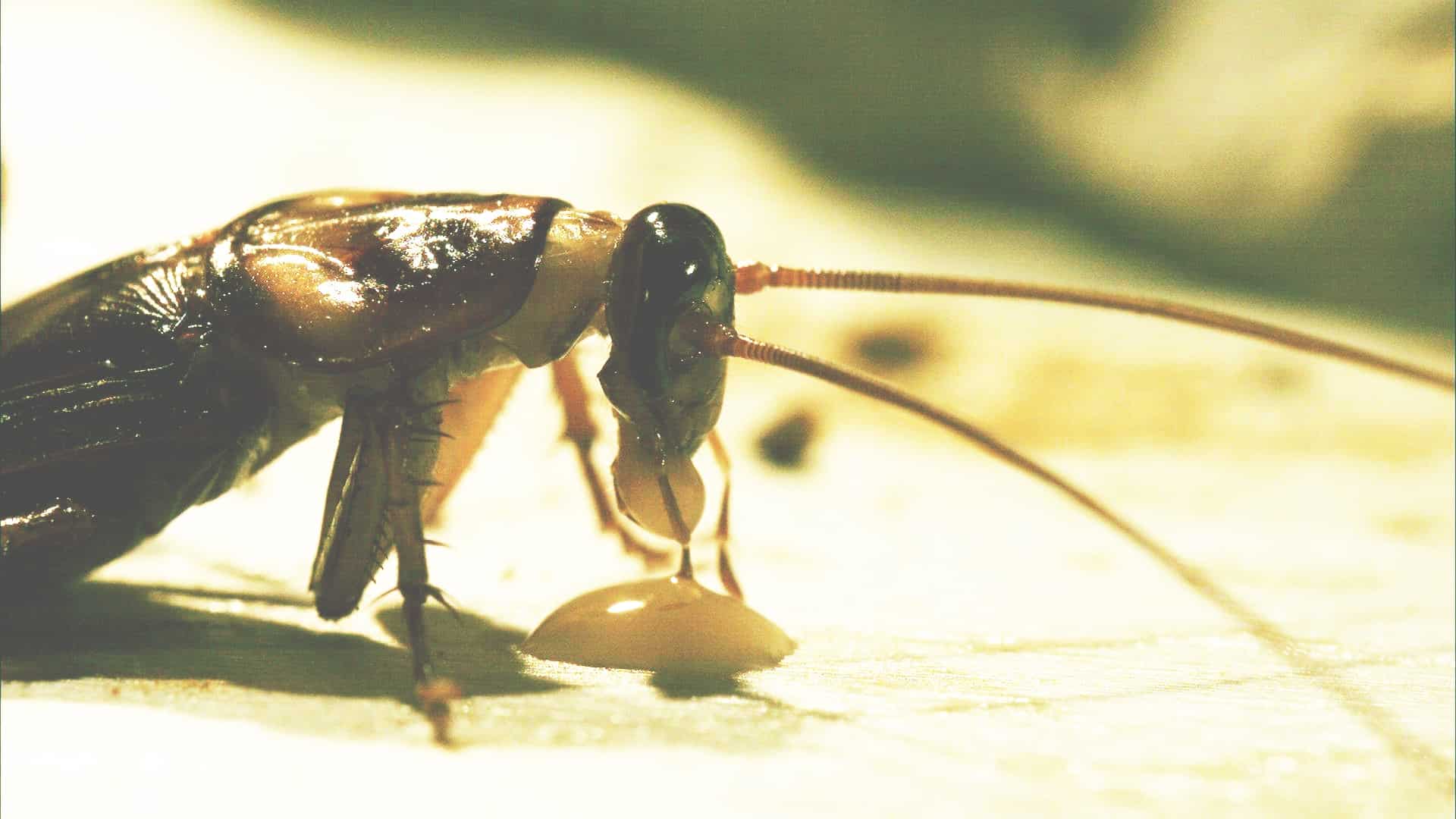
Use many small, label-compliant placements close to confirmed harborages and travel edges; keep them away from sprays, cleaners, heat, water, food-contact surfaces, children, and pets.
Practical, research-led pest advice
Clear identification, proven prevention steps, and honest product guidance—without the panic or guesswork.
The latest from our field guide
Use many small, label-compliant placements close to confirmed harborages and travel edges; keep them away from sprays, cleaners, heat, water, food-contact surfaces, children, and pets.
A small localized problem may decline within weeks, while an established or multi-unit infestation can require repeated monitoring and treatment over a month or longer. Trap trends are more reliable than a promised number of days.

Use sightings, droppings, cast skins, egg cases, odor, bait feeding, and numbered sticky-trap counts to identify the strongest activity zone.
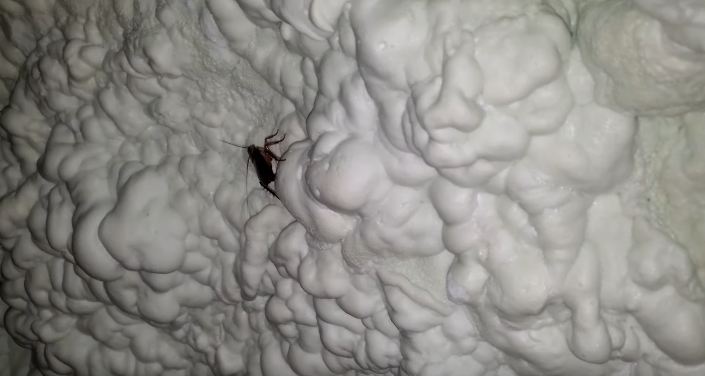
Inspect drains, sump areas, pipe entries, foundation gaps, stored cardboard, condensation, and exterior conditions; then monitor before choosing indoor or perimeter treatment.
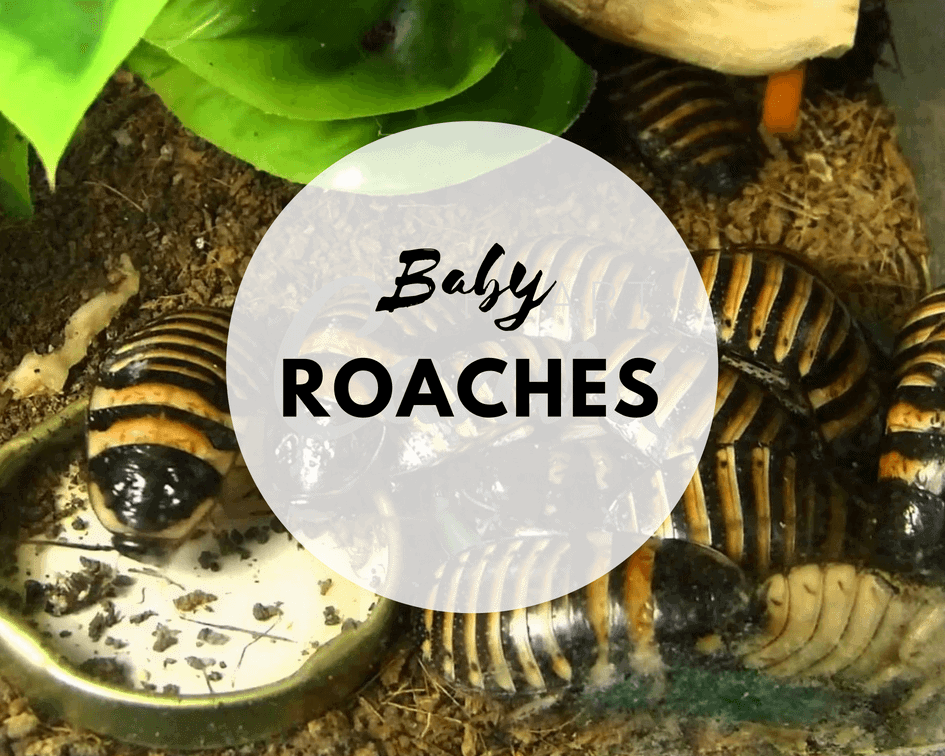
Store food securely, clean spills, inspect the compressor area only according to the appliance manual, vacuum accessible debris, correct condensation or leaks, and monitor along nearby edges.
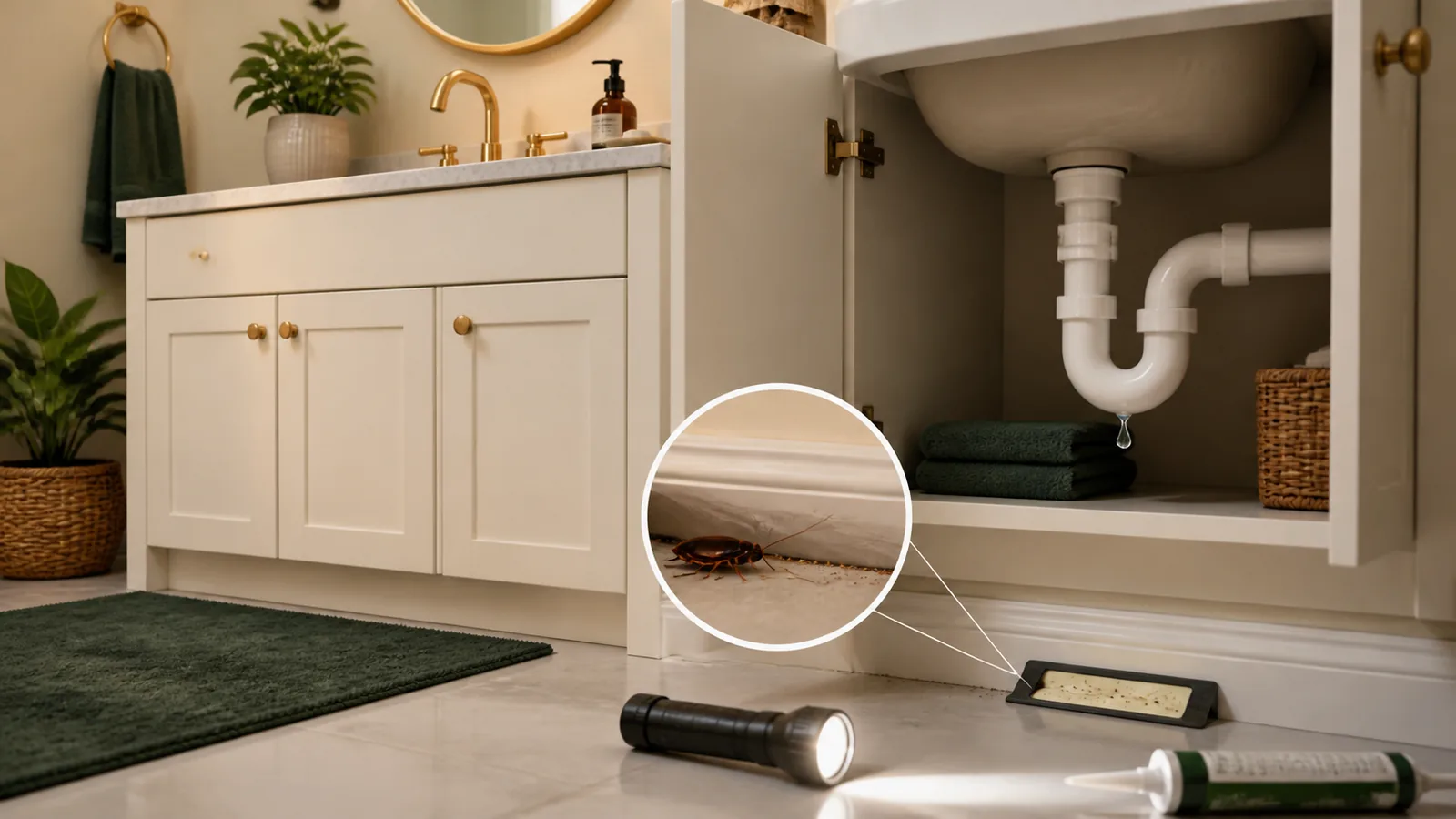
Cover or monitor the drain overnight, inspect the pipe penetration and overflow, clean organic buildup, repair leaks, and avoid pouring unapproved pesticide or household chemicals into plumbing.
Disconnect power when safely inspecting accessible areas, clean filters and residue, check leaks and the cabinet void around the appliance, then monitor and treat only locations permitted by product labels.
Empty one cabinet zone at a time, inspect hinges and seams, vacuum debris, correct leaks and food residue, then place monitors and label-compliant bait near confirmed routes—not on food-contact surfaces.
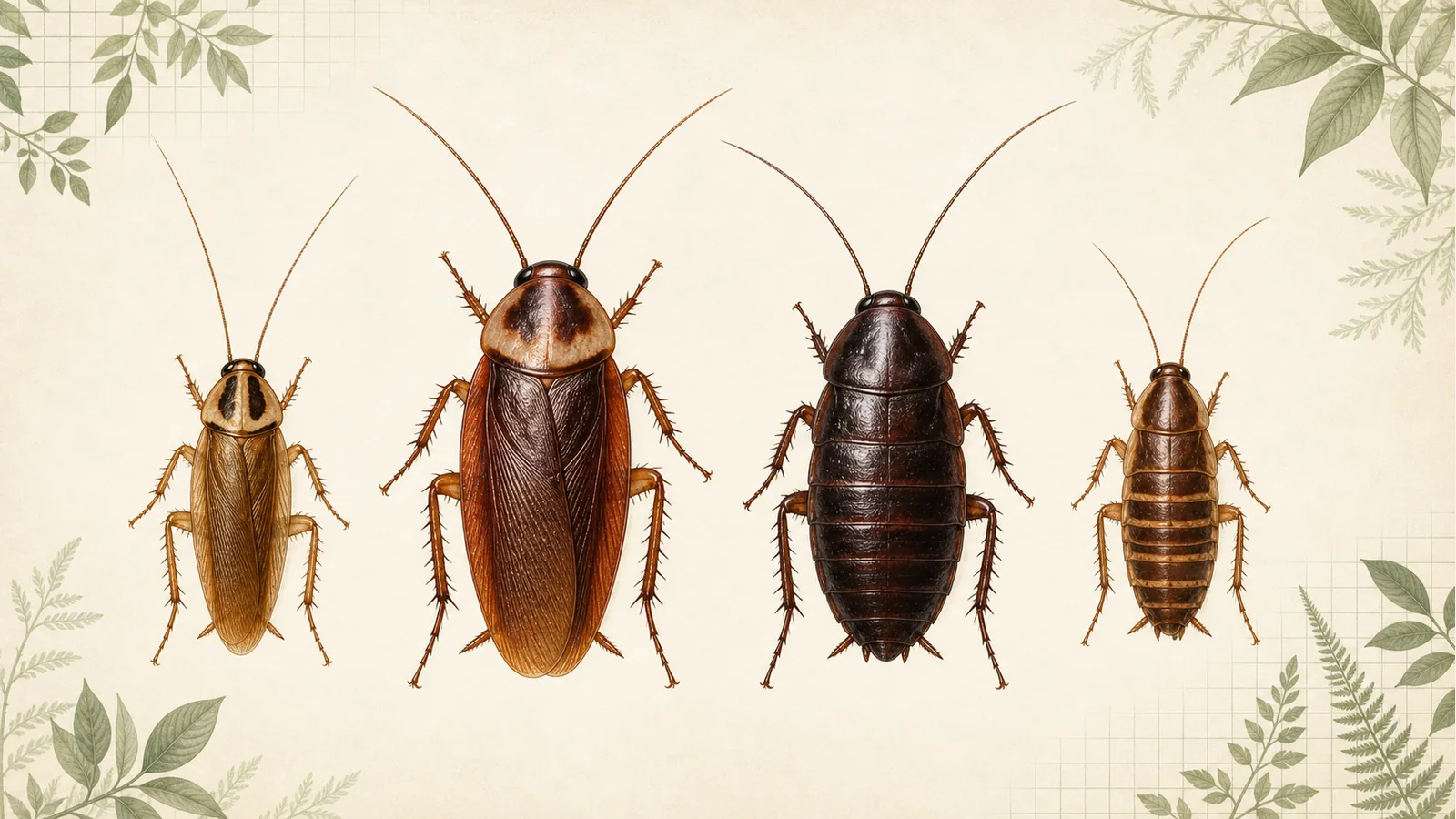
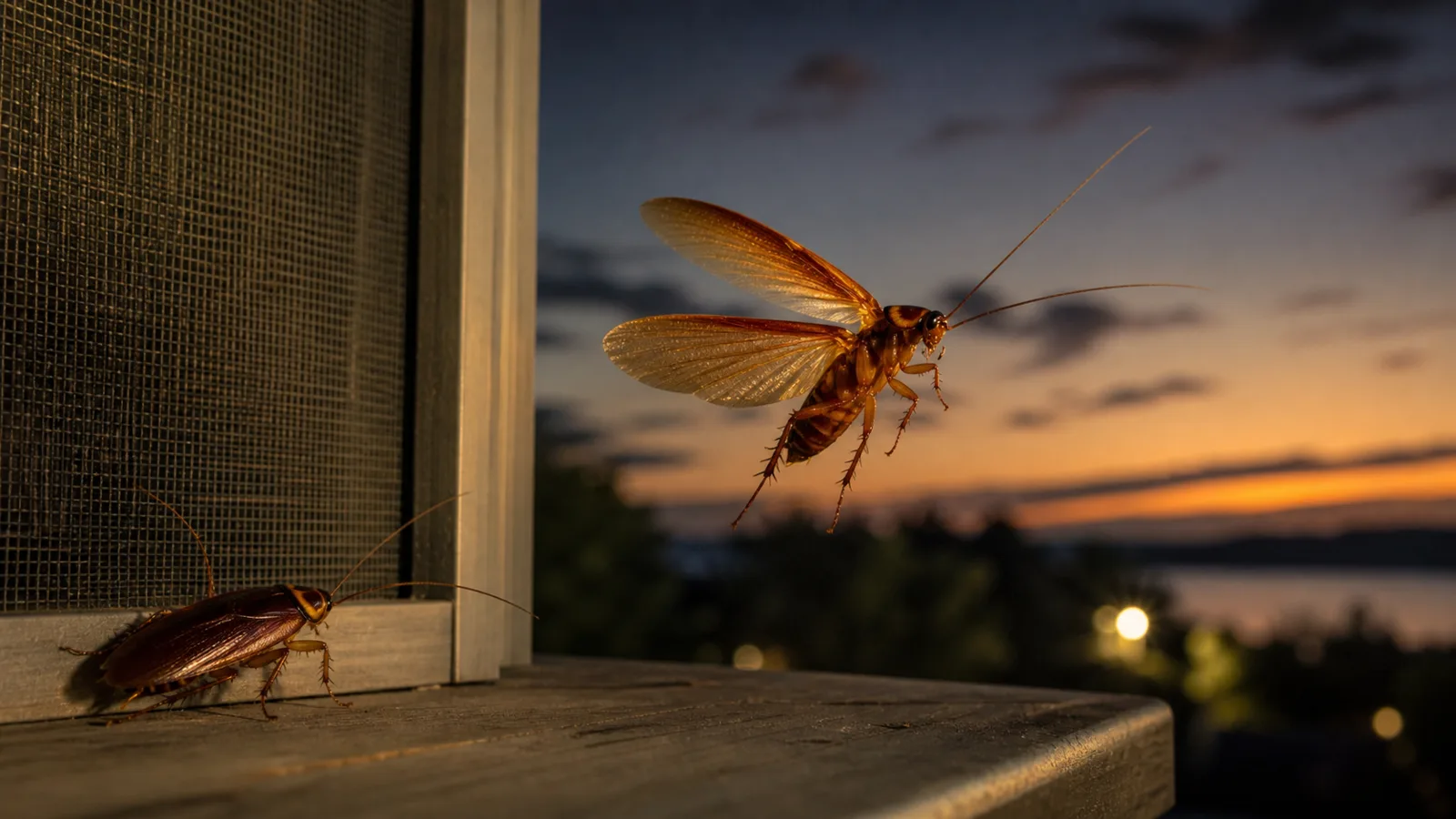
Identify the uniformly dark mahogany adult with fully developed wings, then focus on exterior moisture, roofline entry, tree cover, gutters, mulch, and utility penetrations.
Look for a small cockroach with two pale horizontal bands across the wings or abdomen, then inspect high cabinets, furniture joints, electronics, and warm rooms beyond the kitchen.
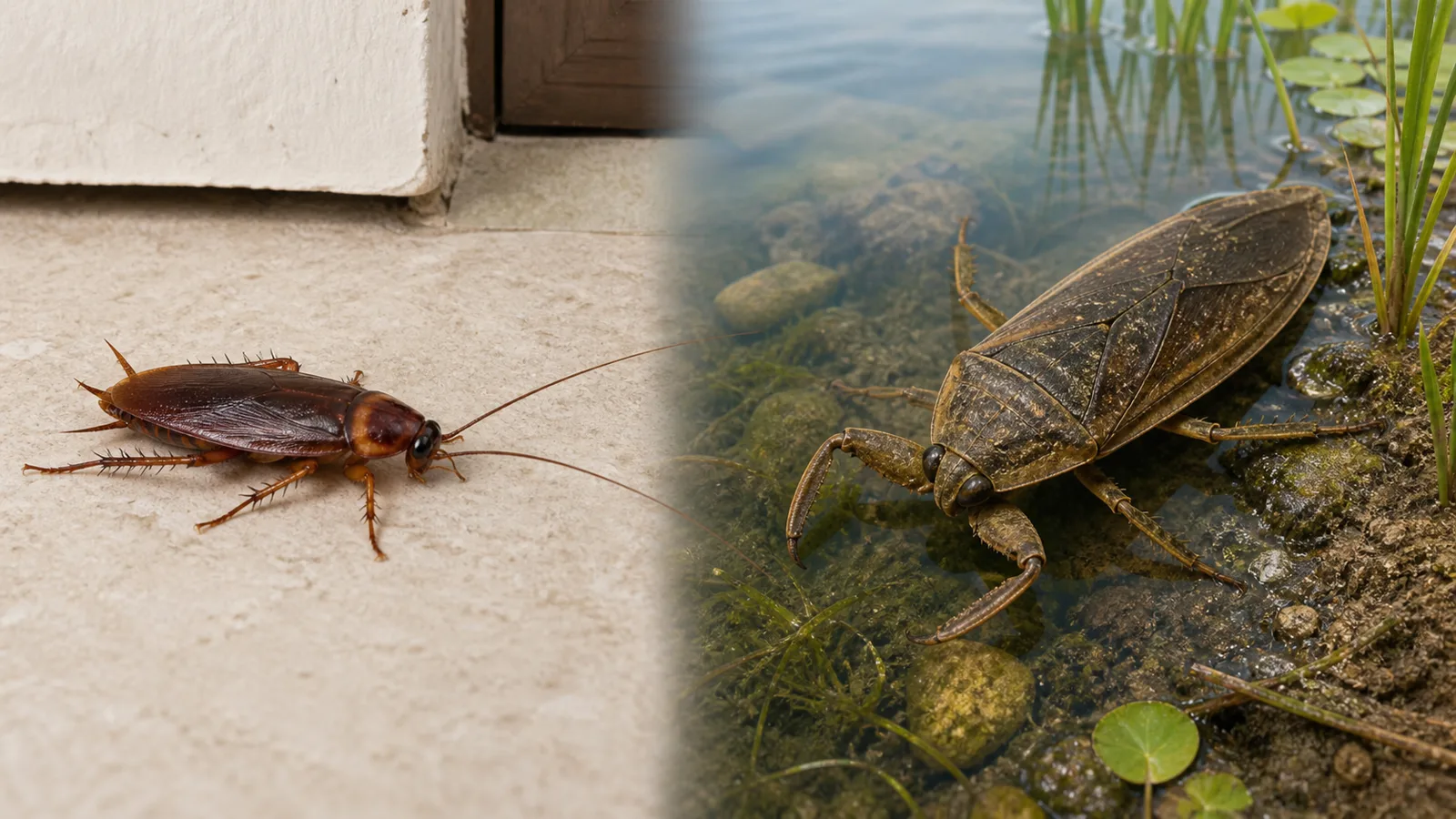
Oriental cockroaches are dark brown to nearly black and usually move at lower, cooler, wetter levels; American cockroaches are larger and reddish brown with a pale marking behind the head.
Identify the large reddish-brown adult by the pale yellow margin behind its head, then inspect drains, pipe chases, basements, utility rooms, and exterior entry points before treating.
Browse our field guides or get in touch with a specific question.