American Cockroach Identification and Control Guide
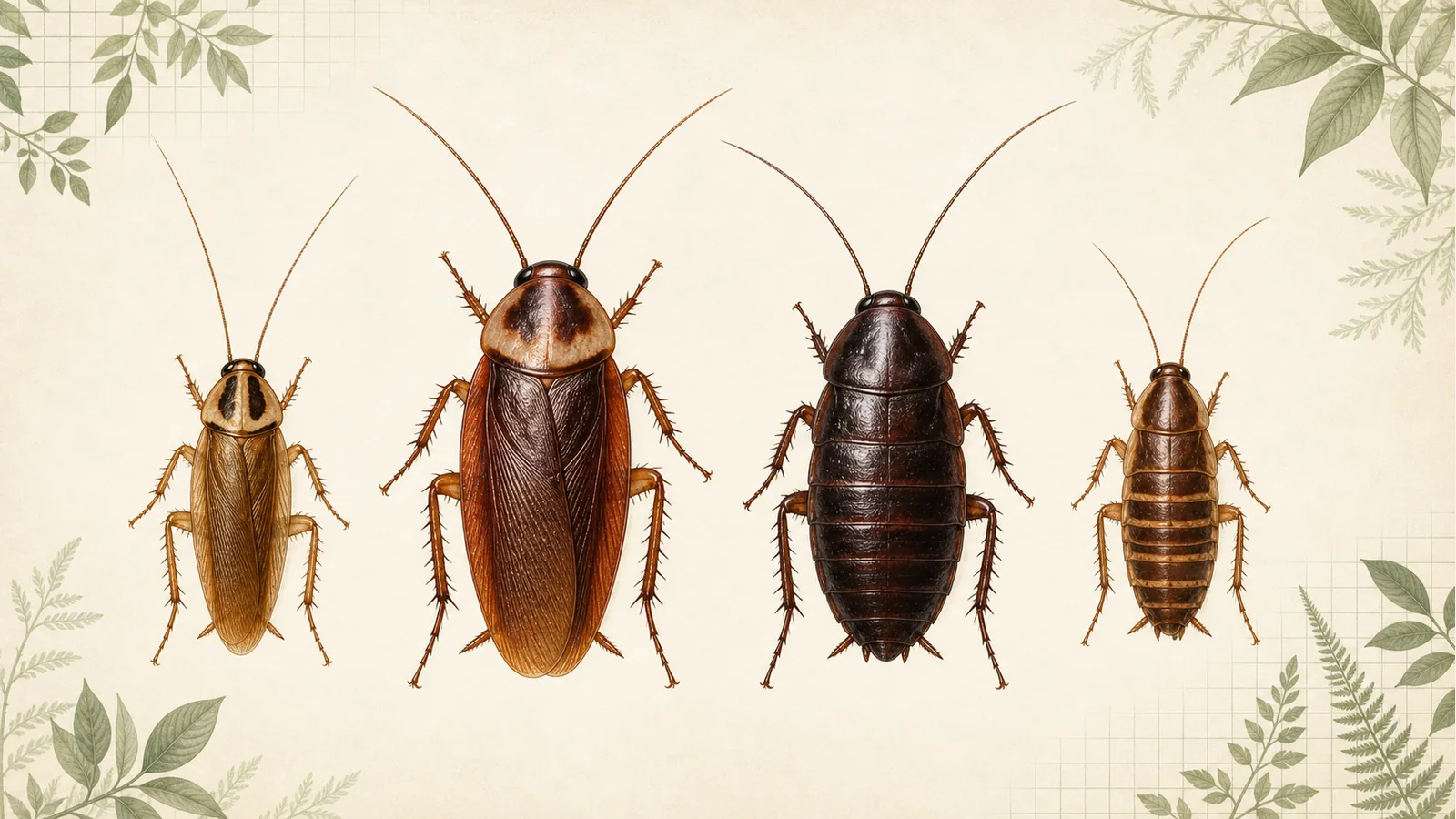
Identify the large reddish-brown adult by the pale yellow margin behind its head, then inspect drains, pipe chases, basements, utility rooms, and exterior entry points before treating.
Explore this topic
Identify common cockroach species, nymphs, egg cases, droppings, wings, behavior, and lookalikes. These guides explain which visual clues matter and why correct identification changes the control plan.
Identify the large reddish-brown adult by the pale yellow margin behind its head, then inspect drains, pipe chases, basements, utility rooms, and exterior entry points before treating.
Look for a tan adult about half an inch long with two dark parallel stripes behind the head. Map activity with sticky monitors, correct food and water sources, and use targeted label-compliant bait as part of a repeated plan.
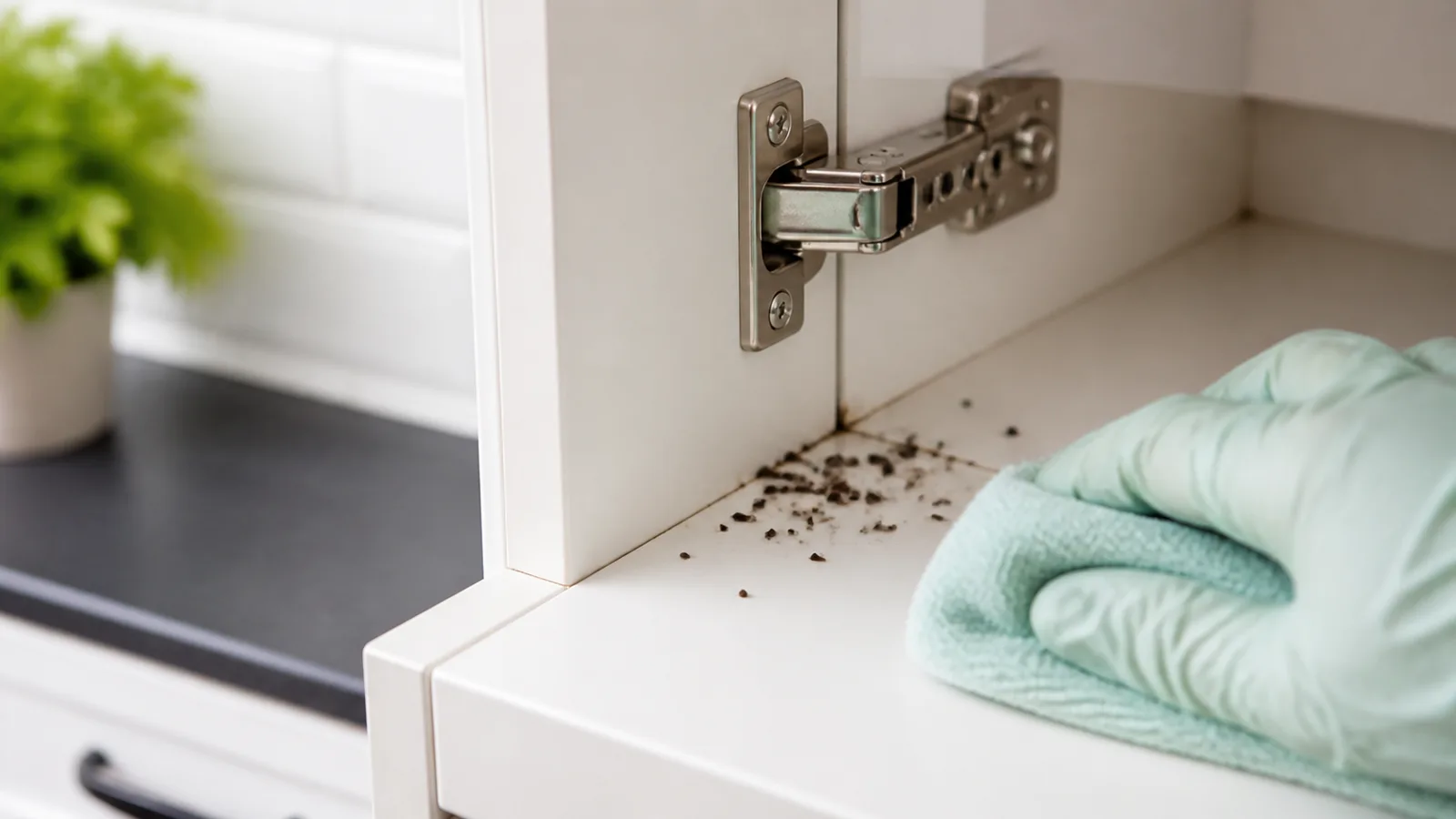
Cockroach droppings range from pepper-like specks to dark, ridged cylinders, depending on species and size. Treat them as evidence of activity, not as a species diagnosis by
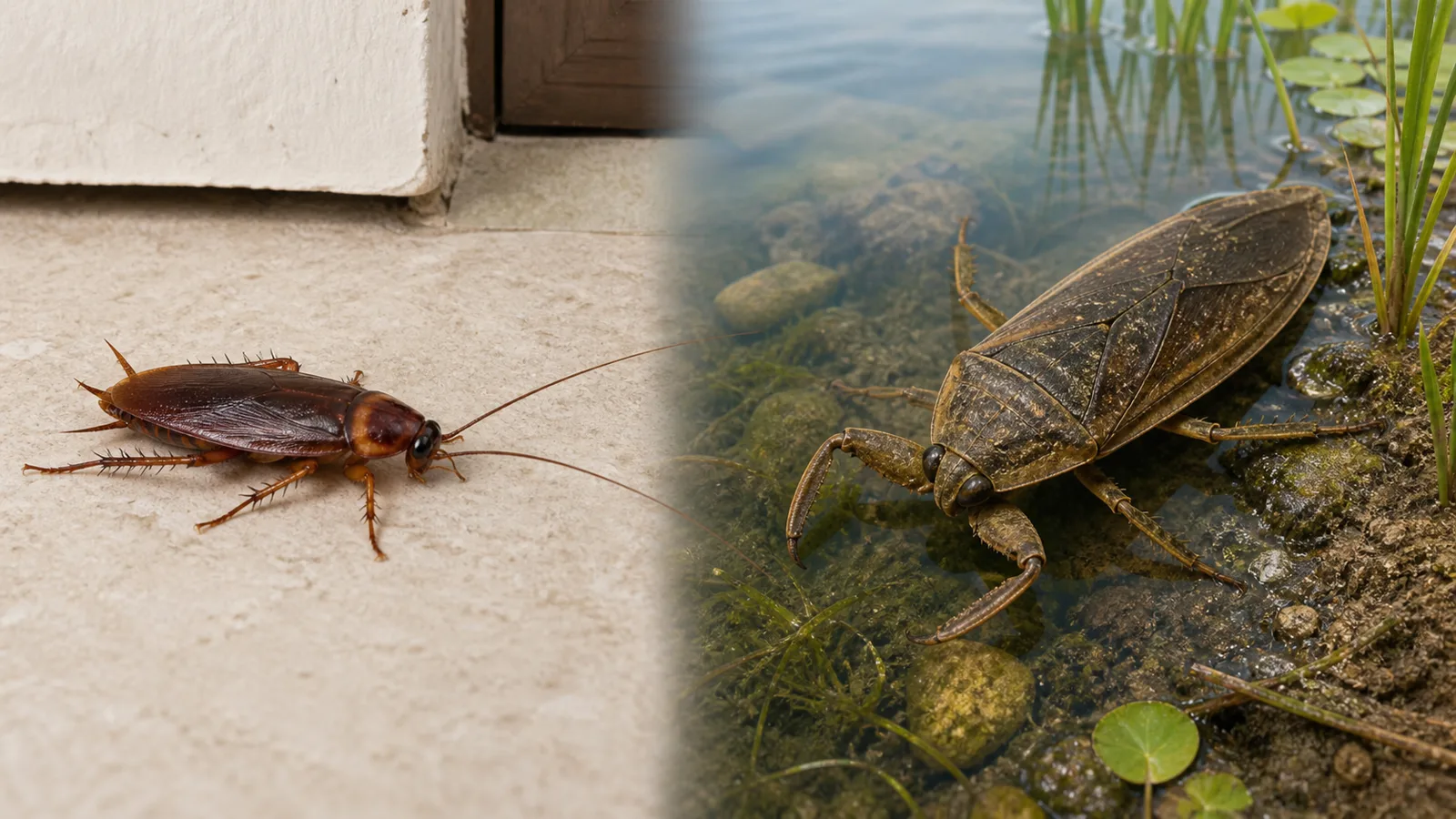
“Water bug” is an imprecise common name. People often use it for large outdoor cockroaches, especially American or Oriental cockroaches, but true aquatic water bugs are different
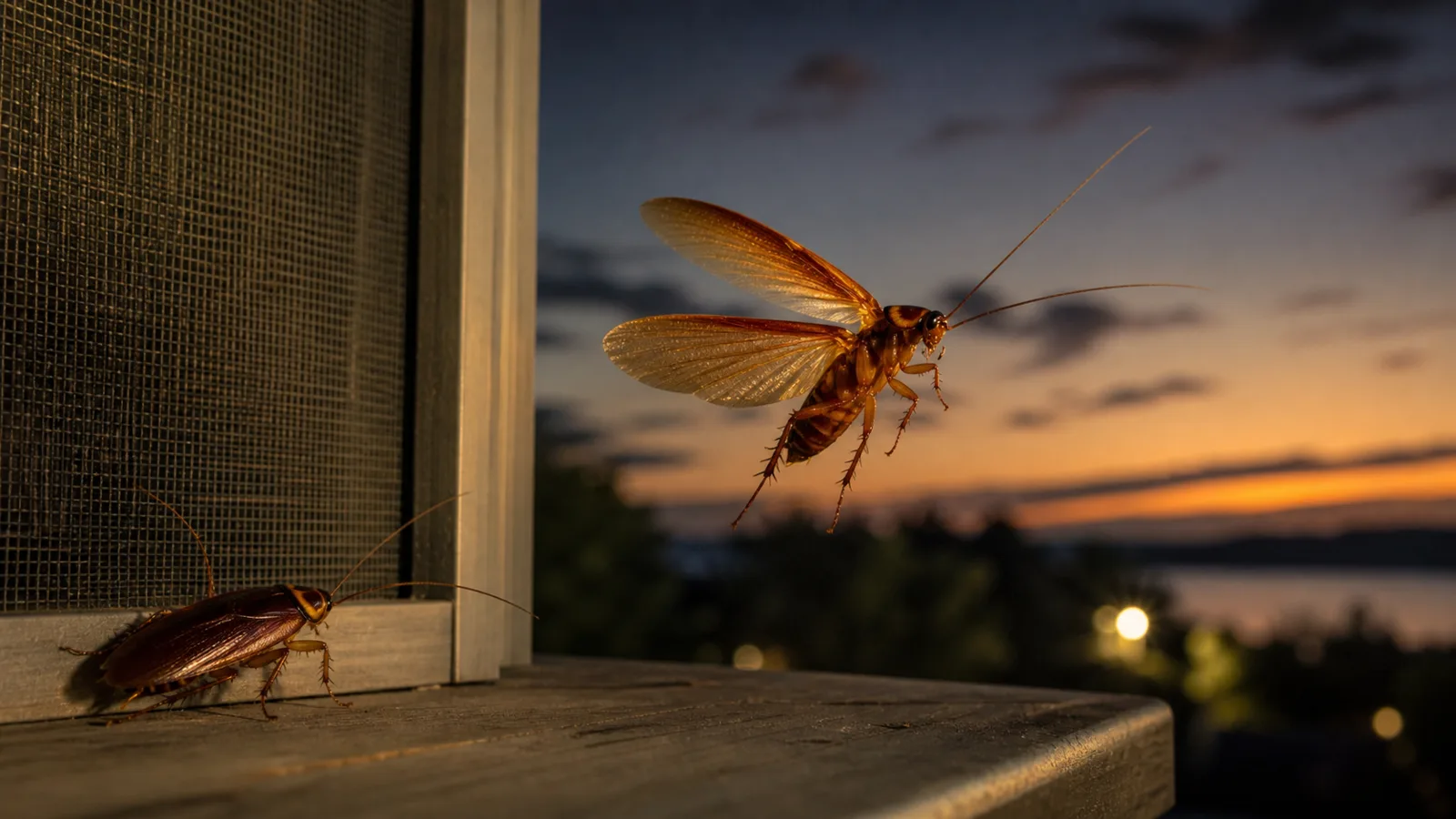
Some adult cockroaches can fly or glide, while others rarely or never fly. Wings alone do not prove strong flight: species, sex, temperature, disturbance, and wing development
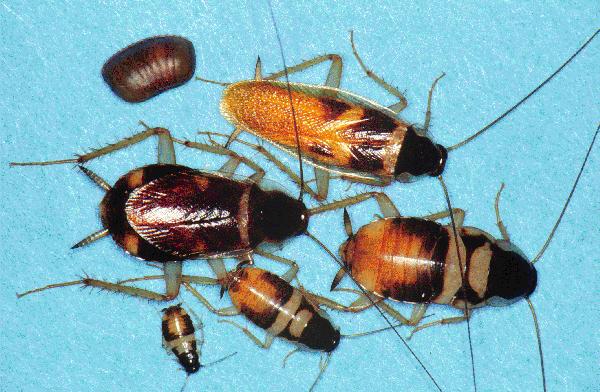
The fastest way to tell German and American cockroaches apart is size and the marking behind the head. German cockroaches are small, tan, and have two dark
Identify common household cockroaches by body shape, antennae, markings, size, life stage, and where they are found.
Learn how common cockroach species reproduce, what their egg cases look like, and what to do when you find one.
Browse our field guides or get in touch with a specific question.