
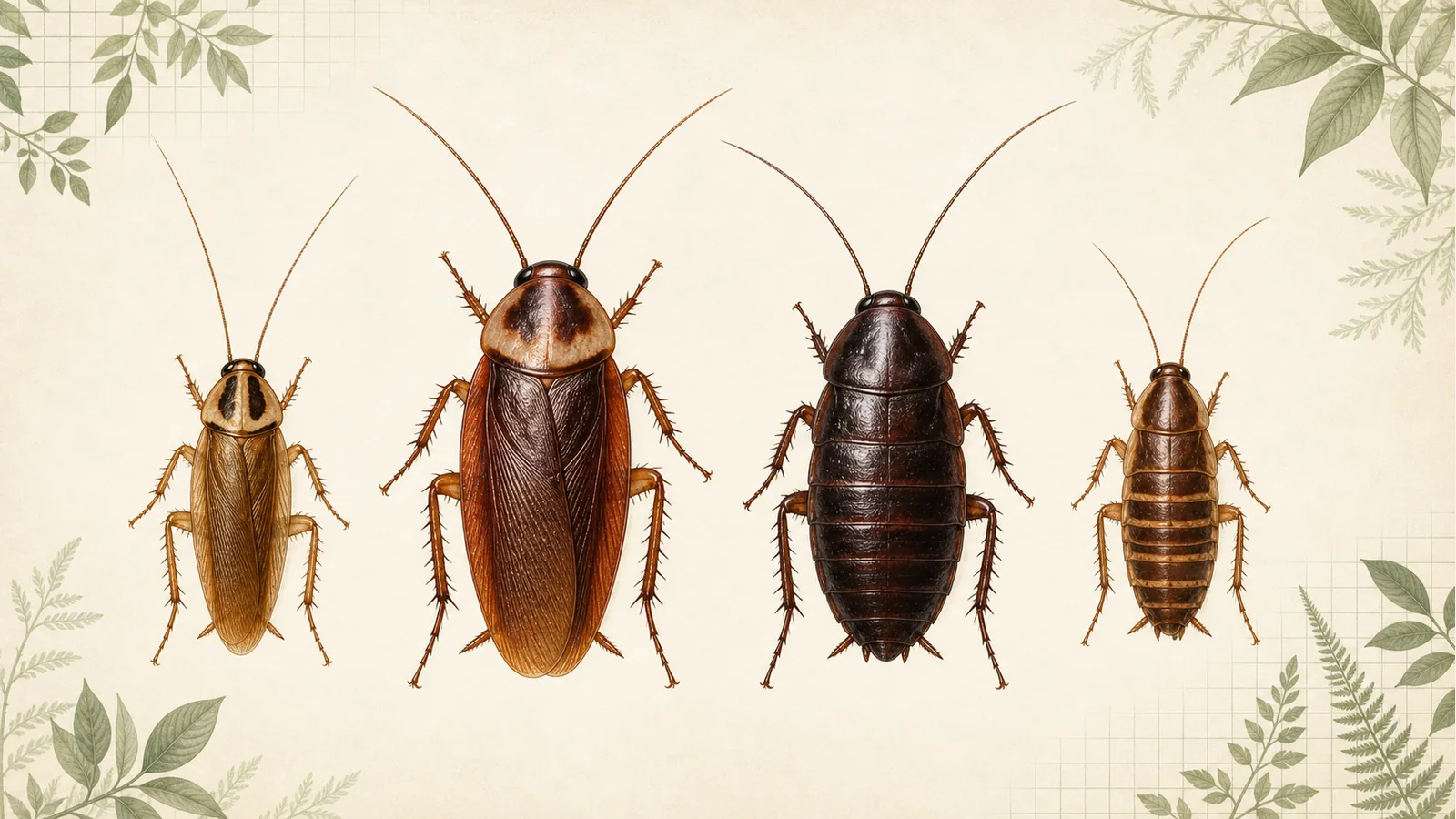
American cockroaches are large reddish-brown insects associated with warm, damp utility areas, drains, sewers, basements, and commercial buildings. The source may be outside the room where one appears.
Cockroach problems are easiest to solve when the evidence is used to choose the next action. A single sighting does not reveal the size of an infestation, and a treatment product cannot compensate for an uncorrected water source, food residue, hiding space, or route between units. This guide uses an integrated pest-management approach: identify, inspect, remove supporting conditions, monitor, treat only where needed, and verify the result.
Unlike German cockroaches, American cockroaches may travel considerable distances from damp harborages and can enter through plumbing or exterior gaps. The objective is not simply to kill the cockroach that is visible. It is to locate the activity zone, reduce the resources supporting it, and measure whether the population is actually declining.
What to look for first
Begin with a flashlight, sticky monitors, a vacuum with a crevice tool, and a written map of sightings. Record the date, room, time, life stage, and nearby food or moisture. These details are more useful than relying on memory after several days.
- Adults commonly reach about 1.5 inches and have a reddish-brown body.
- A pale yellow or cream figure-eight margin appears behind the head.
- Sightings often occur near floor drains, boiler rooms, basements, crawl spaces, or sewers.
- Large dark droppings may resemble blunt-ended cylinders.
Check edges rather than open floor space. Cockroaches commonly follow wall-floor junctions and hide in tight gaps near heat, moisture, food, plumbing, motors, hinges, drawer slides, and cardboard. Inspect at night when practical, but do not assume an empty daytime inspection proves the room is clear.
Step-by-step inspection and control plan
- Confirm the evidence. Photograph or capture a specimen when possible. Separate cockroaches from beetles, crickets, and outdoor insects that entered accidentally.
- Map the activity. Place numbered sticky monitors tight against edges near likely harborages. Avoid placing them in the center of rooms.
- Remove competing food. Clean grease films, crumbs, spills, recycling residue, pet food, and organic debris. Store food in tight containers.
- Correct moisture. Repair leaks, dry sinks and counters overnight, address condensation, and inspect drains and appliance drip areas.
- Reduce shelter and access. Remove corrugated cardboard and clutter, then seal appropriate cracks and pipe penetrations after active hiding places have been treated or cleared.
- Use targeted treatment. Follow the product label exactly. Put bait or dust only in locations and amounts allowed by the label, away from children, pets, food-contact surfaces, and routine cleaning.
- Recheck the monitors. Compare counts weekly. Change one part of the plan at a time so the result can be interpreted.
Priorities for this situation
- Inspect lower building levels, drains, utility penetrations, and exterior moisture.
- Use drain covers and correct damaged seals without blocking required drainage or ventilation.
- Coordinate with building management when pipe chases or shared service areas are involved.
Targeted bait placements are usually more informative than broad spraying because they can be placed near confirmed routes and checked later. Sprays applied near bait can contaminate it or repel insects from the placement area. Total-release foggers distribute insecticide without reaching many protected harborages and may increase exposure; they are not a substitute for inspection and source correction.
A practical monitoring schedule
| Time | What to do | What the result means |
|---|---|---|
| Day 0 | Inspect, photograph evidence, number traps, correct urgent food and water sources. | Creates a baseline before treatment. |
| Days 3–7 | Count captures by trap and replace contaminated or full monitors. | Identifies the strongest activity zones. |
| Days 8–14 | Refresh label-compliant bait where feeding or captures continue; correct missed sanitation and exclusion issues. | A declining count suggests progress; a flat count means the plan needs adjustment. |
| Days 21–30 | Inspect again under appliances, at plumbing, and in adjacent rooms or units. | Persistent nymphs or repeated captures can indicate an untreated harborage or reinvasion. |
Common mistakes
- Assuming every large cockroach is breeding in the kitchen.
- Pouring unapproved pesticides or household chemicals into drains.
- Sealing an active route before understanding where insects are emerging.
Another common mistake is measuring success only by live sightings. Look for trap counts, new droppings, fresh egg cases, bait consumption, and changes in the rooms where activity occurs. Continue monitoring after sightings stop because low-level activity can be easy to miss.
Safety and label checks
Read the complete pesticide label before purchase and again before application. The label determines where the product may be used, how much may be applied, required precautions, and storage or disposal instructions. Never transfer pesticides to an unlabeled container. Keep treatments away from food preparation surfaces and locations accessible to children or pets.
People with asthma or respiratory sensitivity should minimize exposure to airborne irritants and cockroach debris. Clean with methods that avoid spreading dust, ventilate as appropriate, and consider professional help when contamination or pesticide use cannot be managed safely.
When professional help is the better choice
Professional inspection is appropriate when activity involves sewers, commercial food areas, inaccessible utility voids, or recurring entry across several floors. Ask the provider how the species will be confirmed, how monitoring will be used, which conditions must be corrected, what products are proposed, and how follow-up success will be measured. A credible plan should include more than a one-time baseboard spray.
Frequently asked questions
Are American cockroaches the largest house cockroach?
They are among the largest common structural pest cockroaches in the United States.
Can American cockroaches fly?
Adults have developed wings and may glide or fly in warm conditions, although running is common.
Do they always come from drains?
No. Drains are one possible route; basements, utility chases, exterior vegetation, and damaged seals can also be involved.
Can they reproduce indoors?
Yes, especially in warm and humid protected areas with food and water.
Related Roach Expert guides
- German vs American Cockroach: Identification and Control
- Water Bug vs Cockroach: How to Tell the Difference
- Cockroaches in the Bathroom: Causes, Inspection, and Control
- How to Get Rid of Cockroaches: A Practical 7-Step Plan