Cockroaches in a Refrigerator: Inspection and Control
Store food securely, clean spills, inspect the compressor area only according to the appliance manual, vacuum accessible debris, correct condensation or leaks, and monitor along nearby edges.
Practical, research-led pest advice
Clear identification, proven prevention steps, and honest product guidance—without the panic or guesswork.
The latest from our field guide
Store food securely, clean spills, inspect the compressor area only according to the appliance manual, vacuum accessible debris, correct condensation or leaks, and monitor along nearby edges.
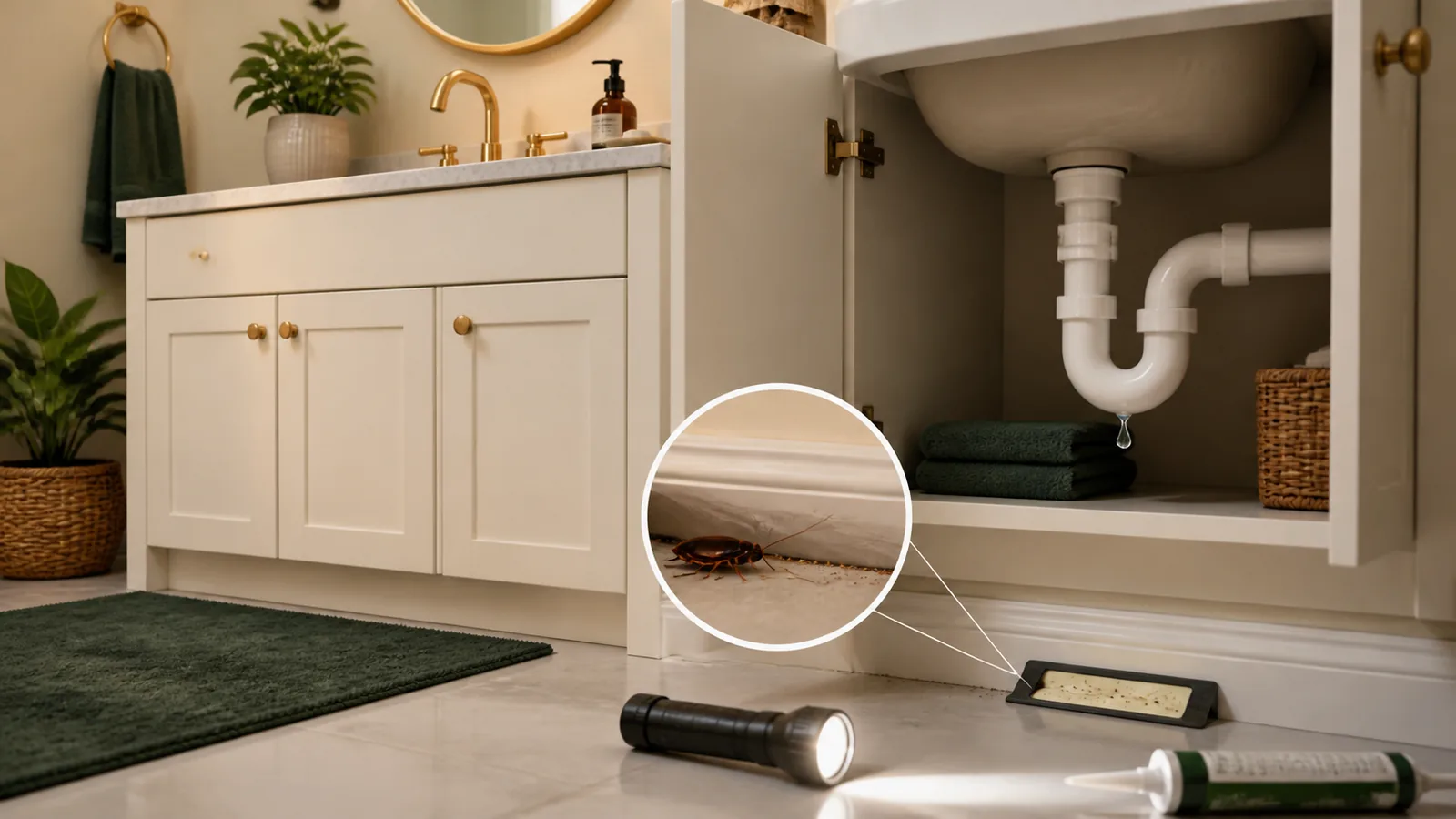
Cover or monitor the drain overnight, inspect the pipe penetration and overflow, clean organic buildup, repair leaks, and avoid pouring unapproved pesticide or household chemicals into plumbing.
Disconnect power when safely inspecting accessible areas, clean filters and residue, check leaks and the cabinet void around the appliance, then monitor and treat only locations permitted by product labels.
Empty one cabinet zone at a time, inspect hinges and seams, vacuum debris, correct leaks and food residue, then place monitors and label-compliant bait near confirmed routes—not on food-contact surfaces.
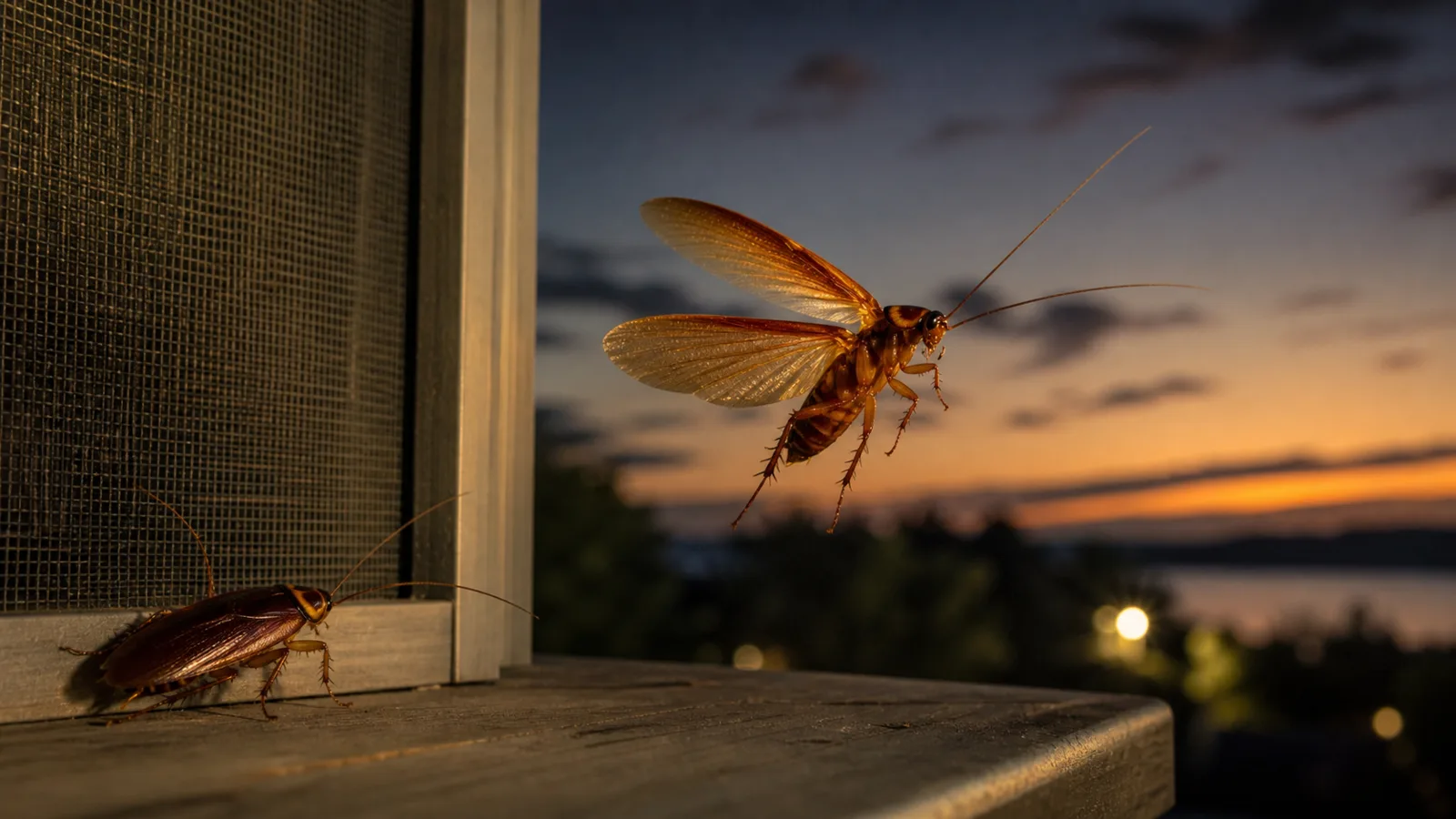
Identify the uniformly dark mahogany adult with fully developed wings, then focus on exterior moisture, roofline entry, tree cover, gutters, mulch, and utility penetrations.
Look for a small cockroach with two pale horizontal bands across the wings or abdomen, then inspect high cabinets, furniture joints, electronics, and warm rooms beyond the kitchen.
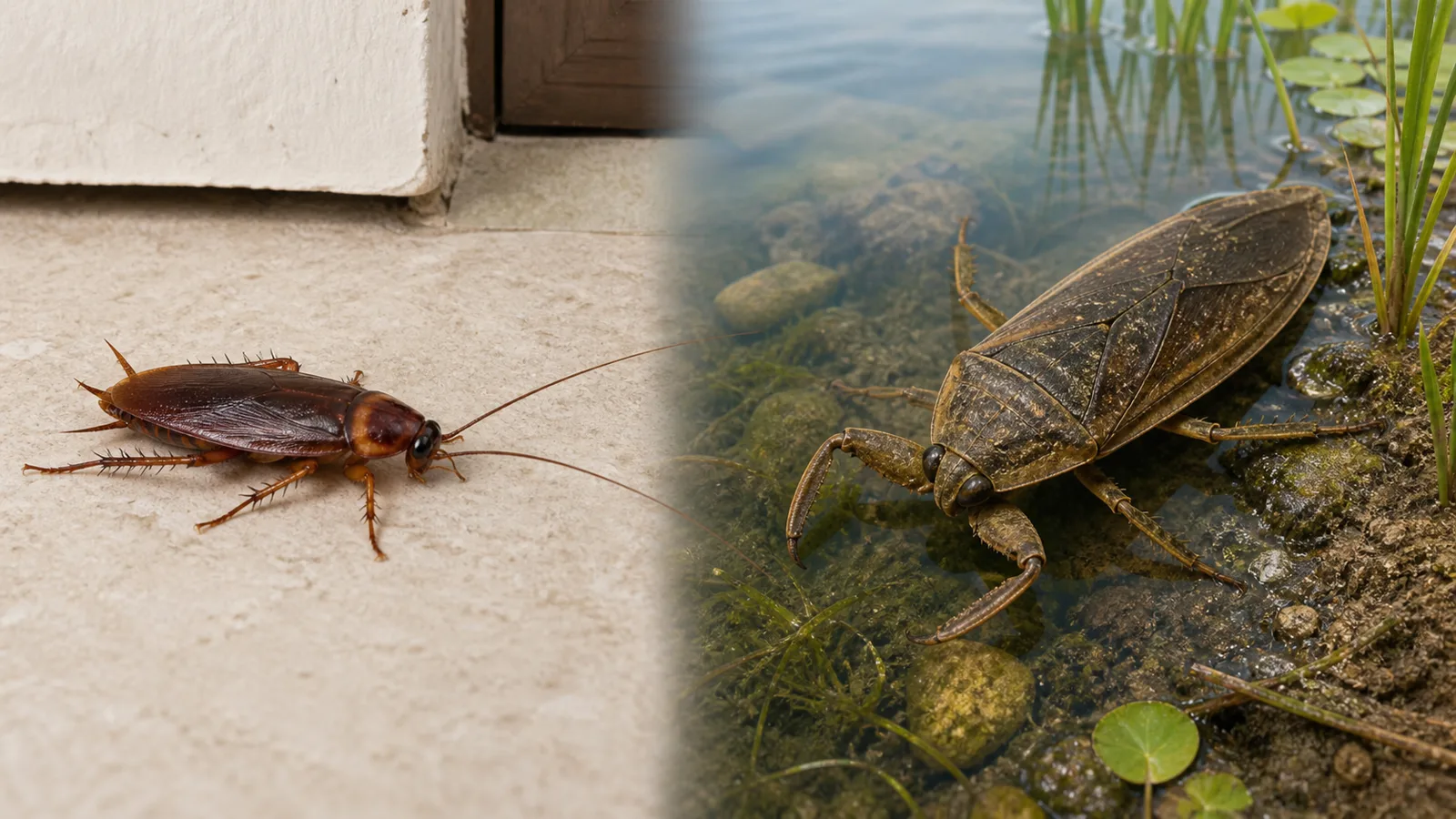
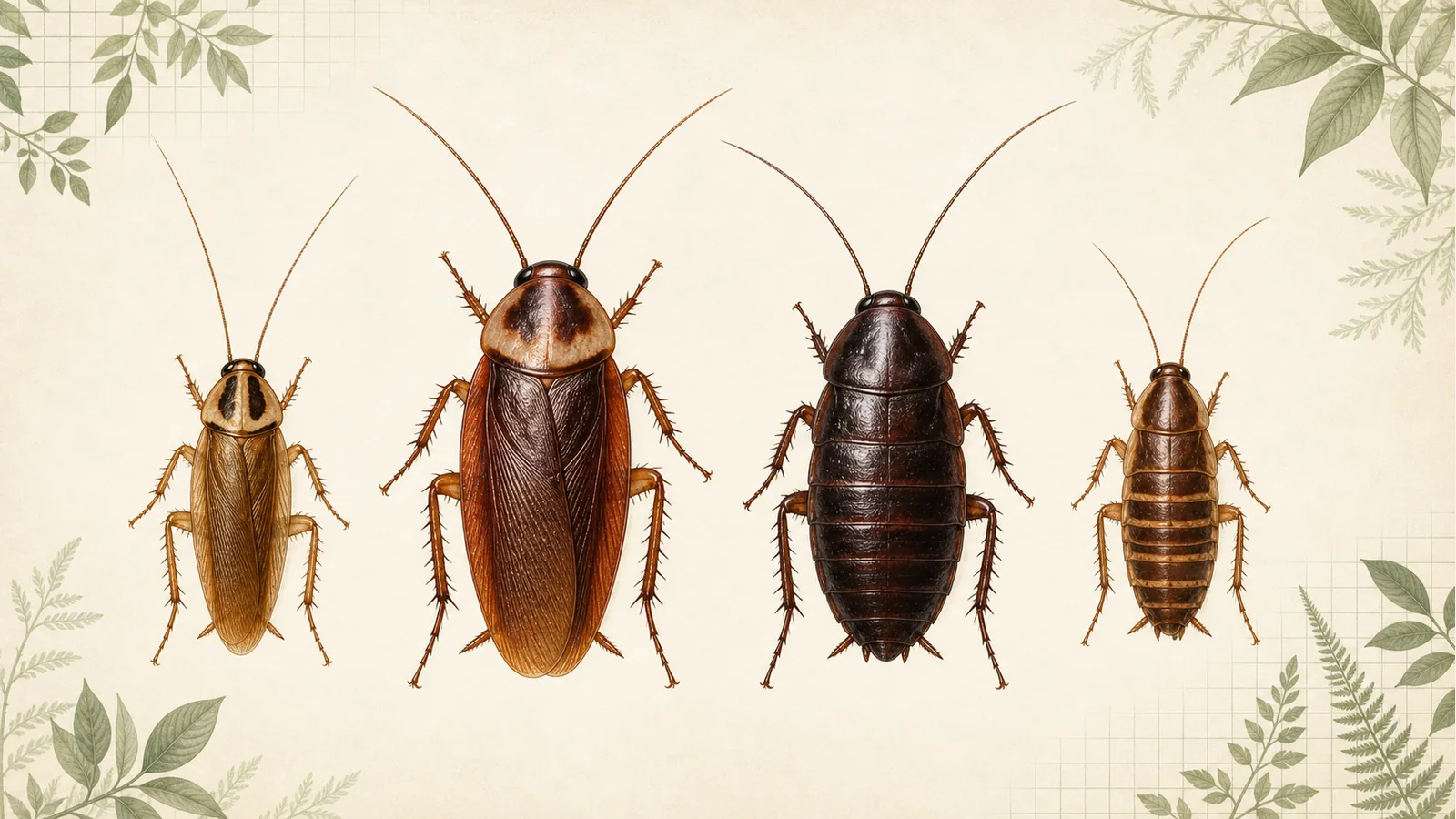
Oriental cockroaches are dark brown to nearly black and usually move at lower, cooler, wetter levels; American cockroaches are larger and reddish brown with a pale marking behind the head.
Identify the large reddish-brown adult by the pale yellow margin behind its head, then inspect drains, pipe chases, basements, utility rooms, and exterior entry points before treating.
Look for a tan adult about half an inch long with two dark parallel stripes behind the head. Map activity with sticky monitors, correct food and water sources, and use targeted label-compliant bait as part of a repeated plan.
Choose between gel bait and enclosed cockroach bait stations using placement precision, convenience, access control and monitoring.
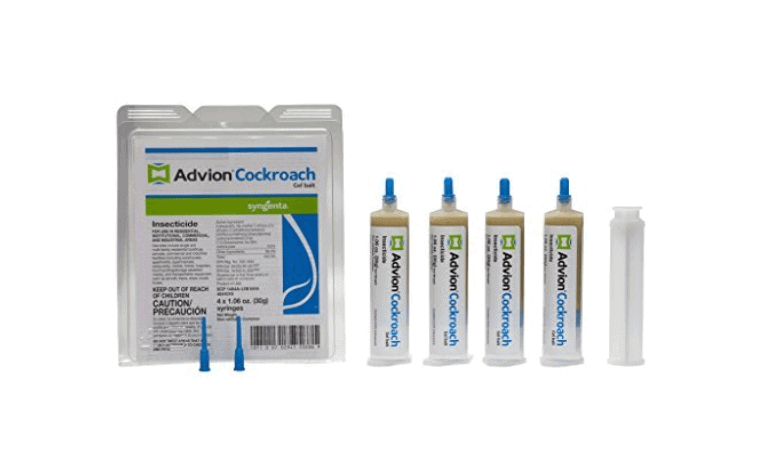
Compare Advion and Alpine cockroach gel baits by active-ingredient rotation, placement, label restrictions and monitoring needs.
Compare Advion gel bait with Combat enclosed bait stations by placement, convenience, treatment role and household constraints.
Browse our field guides or get in touch with a specific question.