
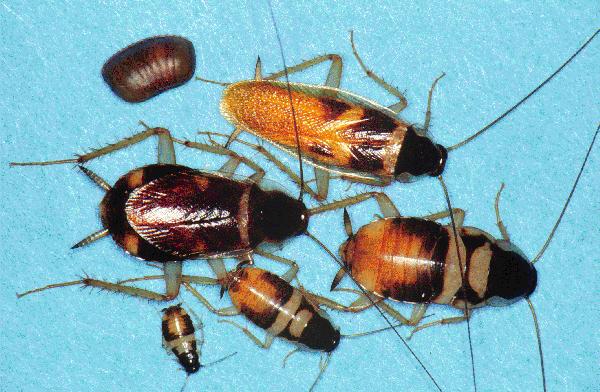
Cockroach eggs develop inside a protective capsule called an ootheca. The case may be carried by the female for part of its development or placed in a protected location, depending on the species. Finding an egg case is a useful identification clue, but successful control requires treating the nearby population and harborage—not merely crushing the case you can see.
Key points
- An ootheca contains multiple eggs and protects them during development.
- German cockroach females carry the case until close to hatching; other species deposit or attach cases earlier.
- Case size and placement can support identification but should not be used alone.
- Physical removal helps, but monitoring and population-level control are still required.
The cockroach life cycle
Cockroaches develop through three stages: egg, nymph, and adult. Nymphs emerge from the egg case and resemble small, wingless adults. They molt repeatedly as they grow. Development time depends on species, temperature, food, water, and other conditions; it can range from months to more than a year. This is why a single fixed treatment schedule does not fit every infestation.
| Stage | Appearance | Control implication |
|---|---|---|
| Egg case | Ridged capsule whose size, color, and placement vary by species | Remove visible cases and search for the female population and harborage |
| Nymph | Small, wingless cockroach that may be darker than the adult | Repeated nymph sightings indicate reproduction or recent hatching nearby |
| Adult | Species-specific markings and developed reproductive features | Correct adult identification guides placement, exclusion, and source control |
Egg cases of common indoor species
German cockroach
The female usually carries the light-brown egg case protruding from the end of her abdomen until close to hatching. This behavior protects the developing eggs and helps explain why removing one loose case does not rule out an active indoor population. German cockroaches reproduce in warm areas near food and moisture.
Brown-banded cockroach
Females attach egg cases to protected surfaces, often in warm, dry, elevated locations. Inspect beneath furniture, shelves, pictures, and objects stored high in a room—not only below sinks.
American and Oriental cockroaches
These larger species deposit egg cases in sheltered areas. Activity may be connected to basements, drains, utility spaces, crawl spaces, sewers, or outdoor harborages. Correcting moisture and entry points is especially important when cockroaches are entering rather than breeding in a kitchen cabinet.
Species and egg-case comparison
| Species | Typical indoor pattern | Egg-case behavior | Priority inspection area |
|---|---|---|---|
| German | Breeds indoors near food and moisture | Female carries the case until near hatching | Appliances, cabinets, sinks, plumbing |
| Brown-banded | Breeds indoors in warmer, drier locations | Case is attached to protected surfaces | Furniture, closets, electronics, elevated objects |
| American | May occupy drains, utility areas, and warm damp voids | Case is deposited in a sheltered location | Basements, drains, sewers, utility penetrations |
| Oriental | Often associated with cool damp sites | Case is deposited in protected material | Crawl spaces, drains, damp basements, exterior edges |
What to do when you find an egg case
- Remove it safely. Pick it up with a disposable towel or vacuum it, seal it in a bag, and place it in outdoor trash.
- Inspect the surrounding area. Use a flashlight to check cracks, cabinet hardware, cardboard, appliances, plumbing, furniture, and wall-floor edges.
- Place monitoring traps. Put glue boards tight against nearby walls and check them consistently.
- Remove food and water. Clean spills and grease, seal food, empty trash, repair leaks, and dry wet areas.
- Use an integrated treatment. Where appropriate, place a labeled cockroach bait close to activity while keeping it inaccessible to children and pets.
- Seal harborages and entry points. Close gaps after active areas have been identified so you do not simply move the problem out of sight.
Can household sprays kill cockroach eggs?
Do not assume that spraying a visible egg case will solve an infestation. The protective case and hidden placement can limit contact, and other females, nymphs, or cases may remain nearby. Broad surface spraying can also interfere with bait and create avoidable exposure. Physical removal plus monitoring, sanitation, exclusion, and targeted treatment is a more complete approach.
Avoid unsafe egg-killing shortcuts
Do not burn egg cases, heat household items without manufacturer guidance, or mix pesticides and cleaners. Vacuum or bag accessible cases, then address the surrounding infestation with labeled methods.
Why species identification changes the plan
German and brown-banded cockroaches can complete their life cycles indoors, while several larger species often move inside from drains, utility areas, or outdoor habitats. A kitchen-focused bait program may work well for German cockroaches but fail to address a broken drain, damp crawl space, or exterior entry point supporting another species. Compare your specimen with What Does a Cockroach Look Like? before choosing a treatment.
When professional help is appropriate
Contact a licensed pest-management professional when egg cases or nymphs appear repeatedly, trap counts remain high, several rooms or apartments are involved, or the source is inside inaccessible building voids. A good service should identify the species, document monitoring results, explain product placement, and schedule follow-up.
Frequently asked questions
Does one egg case mean there are more?
It may. One case confirms that a reproductive female was present, but it does not reveal the population size. Use traps and inspect the surrounding harborage before drawing a conclusion.
Can cockroach eggs hatch after the case is removed?
An intact case can remain viable depending on species and development. Seal it before disposal instead of leaving it loose in indoor trash.
Why do nymphs appear after treatment?
Egg cases may have been protected from treatment, or bait may not immediately affect females carrying cases. Continue monitoring and correct placement, food, water, and access conditions.
Source
Substantially reviewed and updated: August 2026.
2026 field review notes
Species and life-stage identification should be supported by scale, a clear dorsal image, wing development, markings behind the head, egg-case shape, and the environment in which the specimen was found.
Verification checklist
- Confirm the species or evidence before choosing treatment.
- Record active rooms and numbered trap counts before and after changes.
- Correct food, water, shelter, and entry conditions that support activity.
- Read and follow the entire product label, including storage and disposal.
- Escalate to a licensed professional when activity spreads or safe access is limited.
Sources and further reading
30-day verification plan
Use the first inspection as a baseline rather than relying on memory. Number every sticky monitor and write down its exact location, the date, the number and life stage of cockroaches captured, and any nearby food, moisture, heat, or structural gap. Recheck the same locations after seven days. A decline across the active traps is more meaningful than a quiet night with no visible insects.
During the second week, correct conditions that the first inspection missed. Clean grease and crumbs in protected edges, repair small leaks or condensation problems, reduce cardboard and clutter, and inspect the routes connecting the active room to adjacent cabinets, plumbing, appliances, or units. Refresh only those treatment placements that the product label allows and that are consumed, contaminated, or no longer usable.
At days 21–30, compare the new map with the baseline. Persistent nymphs, fresh droppings, repeated captures in an adjacent room, or unchanged counts can indicate a missed harborage, unsuitable placement, reinvasion, or the need for coordinated professional service. Continue a few clean monitors after activity appears to stop so a low-level return is detected early.
Questions to record
- Which trap has the highest count, and did that position change?
- Are adults, nymphs, or both being captured?
- Is new evidence appearing after cleaning?
- Can children or pets reach any treatment placement?
- Does the building have a shared wall, pipe chase, trash area, or untreated neighboring unit?
2 thoughts on “Cockroach Species, Egg Cases, and Life Cycle”