
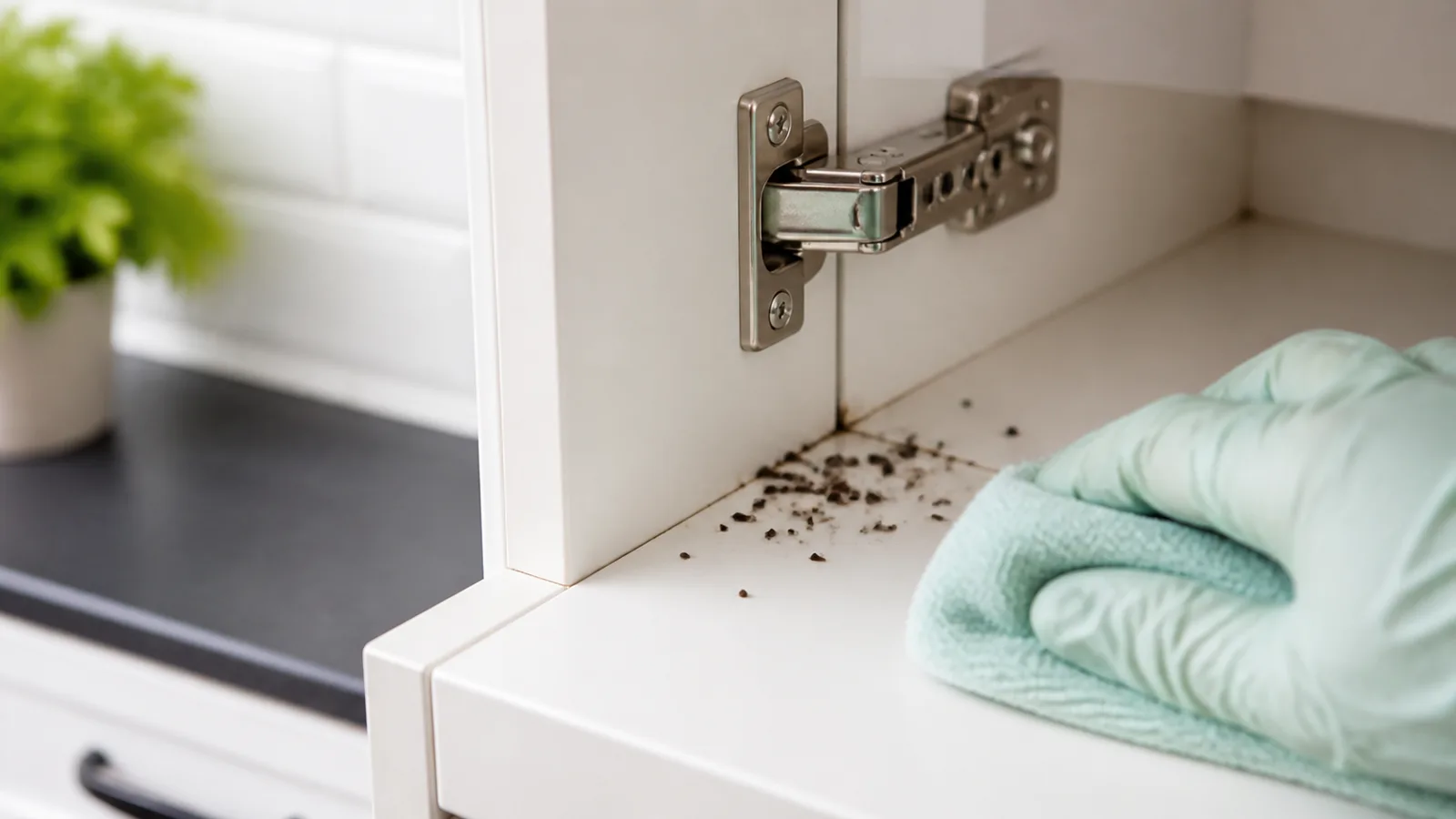
Cockroach droppings range from pepper-like specks to dark, ridged cylinders, depending on species and size. Treat them as evidence of activity, not as a species diagnosis by themselves. Photograph the material, inspect nearby harborages, use monitors, and clean with methods that limit dust exposure.
What cockroach droppings look like
| Sign | Typical appearance | Where it may occur |
|---|---|---|
| Small-roach feces | Fine dark specks, stains, or coffee-ground-like particles | Cabinet corners, hinges, drawer tracks, appliance gaps |
| Large-roach feces | Dark cylindrical pieces that may show ridges | Basements, garages, utility areas, floor drains |
| Smears | Irregular dark marks where moisture is available | Wall-floor junctions and travel routes |
Size and texture vary with diet, moisture, age, and species. Mouse droppings are commonly more uniform and pointed; termite frass forms dry pellets near damaged wood; fly spots are often liquid specks. Do not handle unknown material to test its texture.
What the location tells you
A few old specks do not measure the current population. Concentrated fresh deposits, shed skins, egg cases, odor, and monitor captures near the same crack are stronger evidence. Inspect warm, dark, tight spaces close to food and water: beneath sinks, behind refrigerators, around dishwashers, inside cabinet voids, and near pipe penetrations.
Safe cleanup procedure
- Keep children and pets away and correct leaks before cleanup.
- Wear disposable gloves; use additional protection appropriate to dust, contamination, and product labels.
- Ventilate when practical without blowing debris through the home.
- Avoid dry sweeping or compressed air. Lightly dampen contaminated material using a surface-compatible cleaner.
- Wipe or collect debris, seal waste, and clean tools afterward.
- Wash hands and launder reusable work clothing separately.
People with asthma, allergies, immune vulnerability, or extensive contamination should avoid exposure and consider professional cleanup. Never mix bleach with ammonia, acids, or other cleaners.
Cleaning is not control
After cleanup, place sticky monitors along wall edges and date them. Remove accessible food and water, seal gaps, and use targeted baits or other label-directed control. Broad spraying can scatter activity and contaminate surfaces without reaching harborages. Follow the seven-step cockroach control plan and the prevention checklist.
Frequently asked questions
Do droppings mean there is an active infestation?
They prove past activity. Fresh material, repeated sightings, egg cases, and monitor captures help determine whether activity continues.
Can droppings trigger asthma?
Cockroach body parts and fecal material contribute allergens. Exposure reduction and effective pest control are important parts of an asthma-trigger plan.
Should contaminated food be kept?
Discard food that is open, damaged, or visibly contaminated. Clean intact containers before returning them to storage.
How to tell fresh evidence from old residue
Fresh deposits tend to appear in monitored areas after cleaning and may accompany live captures or new smears. Old residue can remain inside cabinet joints and appliance voids long after activity stops. Clean a small documented test area, date nearby monitors, and inspect under the same lighting every few days. This provides more reliable evidence than trying to judge age from color alone.
Build an evidence map
Number monitoring locations and record droppings, cast skins, egg cases, odor, and captures separately. A kitchen cluster may point to a small indoor species, while isolated large deposits near an exterior door or basement drain may reflect occasional entry by a larger species. Use evidence to guide treatment placement; do not apply pesticide directly to fecal material as a substitute for cleanup.
When cleanup requires more caution
- Contamination extends into HVAC equipment or air pathways.
- Droppings cover porous insulation, food-storage structures, or inaccessible voids.
- Occupants have asthma or severe allergies.
- The material could be from rodents, bats, or another animal.
- Moisture, sewage, or structural damage is also present.
In these situations, confirm the source and obtain qualified remediation guidance. Keep photographs and a record of cleaners and pesticides already used.
Droppings by likely cockroach size
Small indoor species can leave hundreds of tiny spots in compressed harborages. Look closely at cabinet screw holes, hinge recesses, drawer slides, appliance gaskets, and the underside of shelves. Larger species produce more recognizable pellets, but a photograph without a scale can still be misleading. Place a ruler beside—not on—the evidence when documenting it.
Signs that strengthen the identification
- Live or trapped adults and nymphs with matching travel routes.
- Brown egg cases in protected cracks or behind stored items.
- Translucent shed skins from developing nymphs.
- Dark spotting concentrated near warm, humid harborages.
- A persistent odor associated with extensive activity.
No single sign should be used to estimate population size. A small number of visible droppings may sit outside a large hidden aggregation, while an old, heavily spotted appliance may no longer be active.
Detailed cleanup plan by surface
| Surface | Approach | Important limit |
|---|---|---|
| Sealed shelf or tile | Dampen, wipe, clean, and dry | Check cleaner compatibility |
| Unfinished wood | Limit dust, clean carefully, assess absorption | Staining may remain after contamination is removed |
| Cardboard or open food packaging | Seal and discard | Do not try to salvage contaminated porous packaging |
| Appliance void | Unplug only when safe; follow manufacturer access guidance | Do not introduce liquid into motors or electrical parts |
| Insulation or extensive porous material | Obtain remediation advice | Disturbance can spread contaminated dust |
After-cleaning verification
Take an “after” photograph, then leave labeled monitors nearby. Check at 24 hours, seven days, and at an interval appropriate to the treatment plan. Record new spots separately from captures. If evidence returns in the same corner, inspect the crack immediately above or behind it. If it appears across several rooms, widen the inspection and coordinate with adjacent units where applicable.
Information to give a pest professional
Provide the first sighting date, rooms involved, photographs, monitor counts, previous pesticides, leak history, recent deliveries, and whether neighboring units have activity. This reduces guesswork and helps the technician choose inspection points instead of starting with broad treatment.
Sources
Prevent contamination from returning
Once activity declines, keep dry foods in sealed containers, clean cabinet tracks during routine maintenance, and inspect appliance edges without disturbing electrical components. Replace heavily contaminated shelf liners rather than covering them. Date new monitors and keep them in the same locations so trends remain comparable.
Recheck after plumbing work, appliance replacement, moving boxes, or treatment in a neighboring unit. These events can change travel routes. If fresh droppings return but monitors remain empty, move monitors closer to the evidence and confirm that the material is not falling from a rodent, bat, termite, or building component above.