
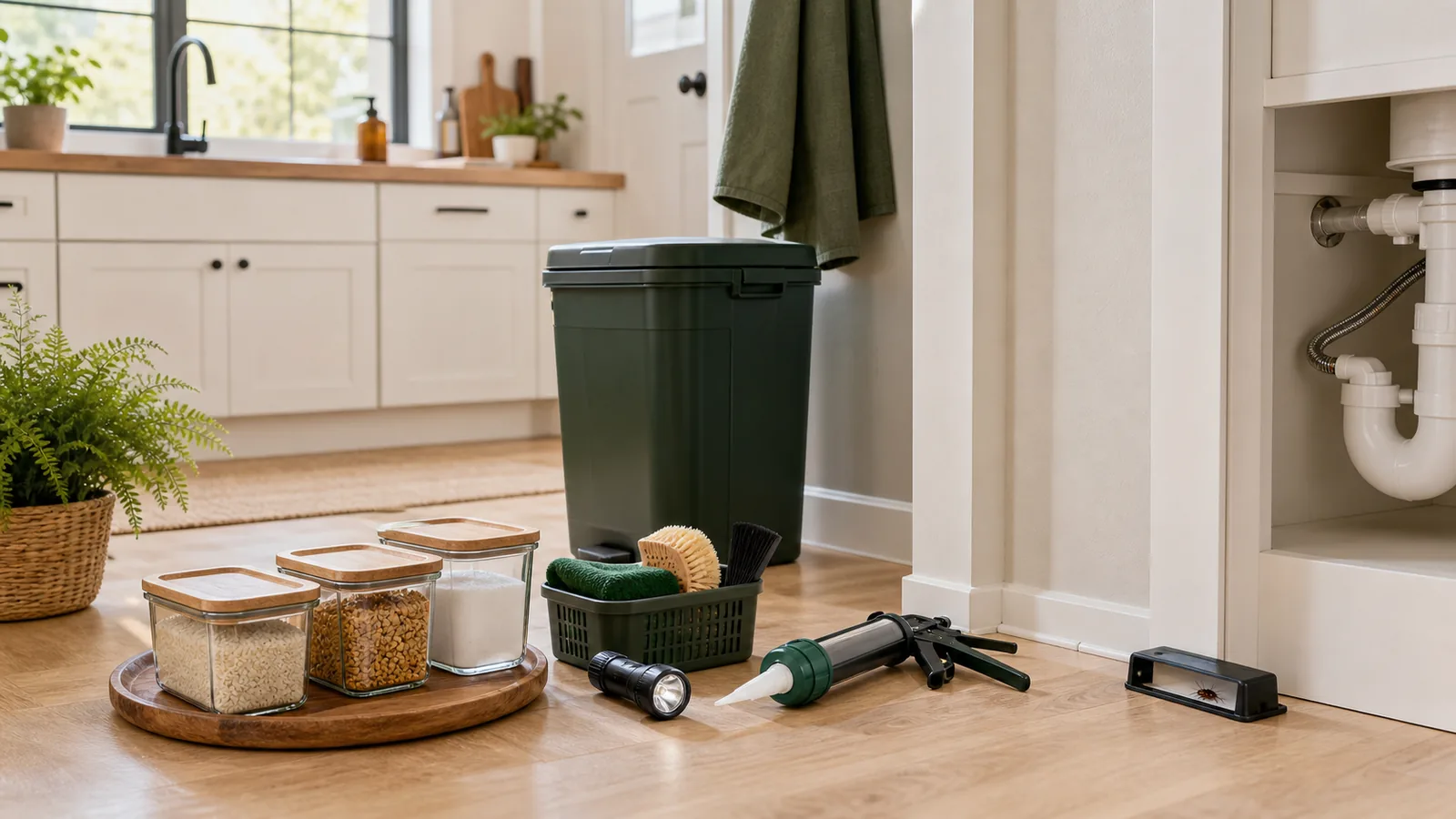
Cockroach prevention works best as a routine, not a one-time deep clean. Remove dependable food and water, reduce hiding places, block entry routes, inspect deliveries, and monitor the areas most likely to support activity. The checklist below separates daily, weekly, monthly, seasonal, and move-in tasks so the plan remains practical.
The five-part prevention system
- Sanitation: make food residue and waste unavailable overnight.
- Moisture control: repair leaks and dry sinks, floors, and condensation.
- Exclusion: seal cracks, pipe openings, doors, screens, and shared routes.
- Monitoring: use dated sticky traps to detect activity early.
- Inspection: check packages, used items, appliances, and high-risk locations.
Daily cockroach prevention checklist
- Wash dishes or load the dishwasher before bed.
- Wipe crumbs, grease, spills, and food residue from counters and cooking surfaces.
- Sweep or vacuum beneath the dining area and around pet-feeding stations.
- Store food, snacks, and pet food in containers with secure lids.
- Empty food waste into a lidded bin and clean spills around the bin.
- Do not leave pet food out overnight; clean and dry bowls when practical.
- Wipe standing water from sinks, counters, bathroom floors, and appliance drip areas.
- Hang wet towels and bathmats so they dry fully.
- Check for a new drip, plumbing leak, or unusual cockroach sighting.
Weekly checklist
- Clean beneath countertop appliances and around the stove.
- Vacuum cabinet corners, drawer tracks, pantry edges, and baseboards.
- Inspect behind or beside the refrigerator and dishwasher where safely accessible.
- Clean the trash and recycling area; rinse containers that held food.
- Remove cardboard boxes, paper bags, and clutter from kitchens and bathrooms.
- Check under sinks for moisture, droppings, egg cases, shed skins, or spotting.
- Review sticky monitors and record the location and number captured.
- Clean floor drains and confirm rarely used drains have not dried out.
Monthly checklist
- Inspect pipe penetrations beneath sinks, behind toilets, and near laundry equipment.
- Check door sweeps, window screens, weatherstripping, and utility openings.
- Look for condensation around pipes, toilet tanks, and HVAC equipment.
- Move stored goods away from walls where possible so edges remain inspectable.
- Rotate pantry stock and clean spilled flour, cereal, pet food, and dry goods.
- Inspect small appliances for crumbs and warmth-related harborages.
- Replace full, wet, dusty, or expired sticky monitors.
- Review the monitoring record for increasing activity or a new hotspot.
Seasonal and exterior checklist
Large outdoor-associated cockroaches often enter through structural gaps or arrive from damp exterior harborages. At least seasonally:
- Remove leaf litter, stacked cardboard, and decaying organic debris near the foundation.
- Store firewood and dense materials away from exterior walls.
- Trim vegetation that creates a damp bridge against the building.
- Correct standing water, clogged gutters, irrigation leaks, and poor drainage.
- Inspect vents, screens, thresholds, garage doors, and utility penetrations.
- Use outdoor lighting and door-opening habits that reduce insect entry where practical.
- Check crawl spaces, basements, boiler areas, and floor drains for persistent moisture.
Room-by-room prevention priorities
| Area | Main risk | Priority action |
|---|---|---|
| Kitchen | Food residue, warmth, appliance voids | Nightly sanitation, dry sink, monitor near appliances |
| Bathroom | Leaks, condensation, pipe routes | Dry surfaces, repair plumbing, inspect pipe gaps |
| Pantry | Spilled dry goods and cardboard | Sealed containers, stock rotation, edge cleaning |
| Laundry | Humidity, lint, utility openings | Repair connections, ventilate, clear floor edges |
| Basement/crawl space | Moisture and exterior-associated species | Drainage, dehumidification, exclusion, monitoring |
| Garage | Deliveries, boxes, door gaps | Inspect items, reduce cardboard, improve door seals |
| Electronics area | Warmth, crumbs, inaccessible voids | Keep food away and monitor externally; never spray energized equipment |
How to place monitoring traps
Place sticky monitors flush against edges where cockroaches travel: under sinks, beside the refrigerator, near the dishwasher, behind the toilet where accessible, and along pantry or utility-room walls. Do not place them in the center of an open room. Number and date each trap, then inspect it on the same day each week.
A capture is information, not proof that the trap failed. Record the species or life stage when possible and intensify inspection near the most active monitor. Multiple nymph sizes usually indicate reproduction nearby.
Seal entry points correctly
Use appropriate sealant around small pipe gaps, cabinet joints, baseboards, and wall penetrations. Larger openings may require mesh or backing material. Install properly fitted door sweeps and repair screens. In apartments, report openings connected to shared utility chases rather than sealing building systems without authorization.
Correct leaks before sealing and inspect active harborages first. Exclusion works best after the source is understood; otherwise activity may simply shift to another route.
Packages, groceries, and used items
- Inspect corrugated cardboard, grocery cartons, beverage cases, and delivery bags.
- Unpack in a well-lit area rather than storing boxes in the kitchen.
- Transfer dry food to clean sealed containers when appropriate.
- Inspect used appliances, furniture, electronics, and moving boxes before bringing them inside.
- Vacuum and clean accessible seams; follow manufacturer instructions for appliances.
Apartment prevention checklist
Prevention in connected housing requires coordination. Keep dated photos and monitor records, report leaks promptly, and notify management when captures continue. Ask whether adjoining units and common plumbing or trash areas will be inspected. Do not rely on treating one unit if cockroaches are moving through shared routes.
See the full apartment cockroach control guide and the focused guide for bathroom plumbing and moisture.
What prevention cannot do
Prevention reduces risk and helps detect activity early, but it does not instantly eliminate an established population. If monitors show repeated captures, move into an active control plan using inspection, sanitation, moisture correction, appropriately labeled bait, and follow-up. Start with how to get rid of cockroaches.
Safety note: Preventive pesticide spraying is not a substitute for sanitation, exclusion, and monitoring. If a pesticide is needed, choose one labeled for the exact site and pest, read the complete label, and protect children, pets, food, and food-contact surfaces.
When to escalate
Escalate when captures rise for two consecutive checks, nymphs appear in several rooms, daytime sightings occur, or activity continues despite a carefully followed plan. Shared-building, sewer, utility, and inaccessible wall-void sources often require property management or a licensed pest professional. Use our DIY vs professional decision guide.
Frequently asked questions
Does a clean home guarantee there will be no cockroaches?
No. Cockroaches can enter in packages or migrate through connected buildings. Cleaning removes resources and makes monitoring and treatment more effective, but exclusion and early detection are also necessary.
How many sticky traps should I use?
Use enough to cover the primary risk zones and identify differences between locations. A small kitchen may need monitors under the sink, beside major appliances, and near the pantry. Follow the trap instructions and keep them inaccessible to children and pets.
Should I spray baseboards to prevent cockroaches?
Routine broad spraying can create unnecessary exposure and may interfere with bait-based control. Monitoring, sanitation, moisture management, and exclusion provide a better foundation. Use targeted products only when the label and evidence support the placement.