
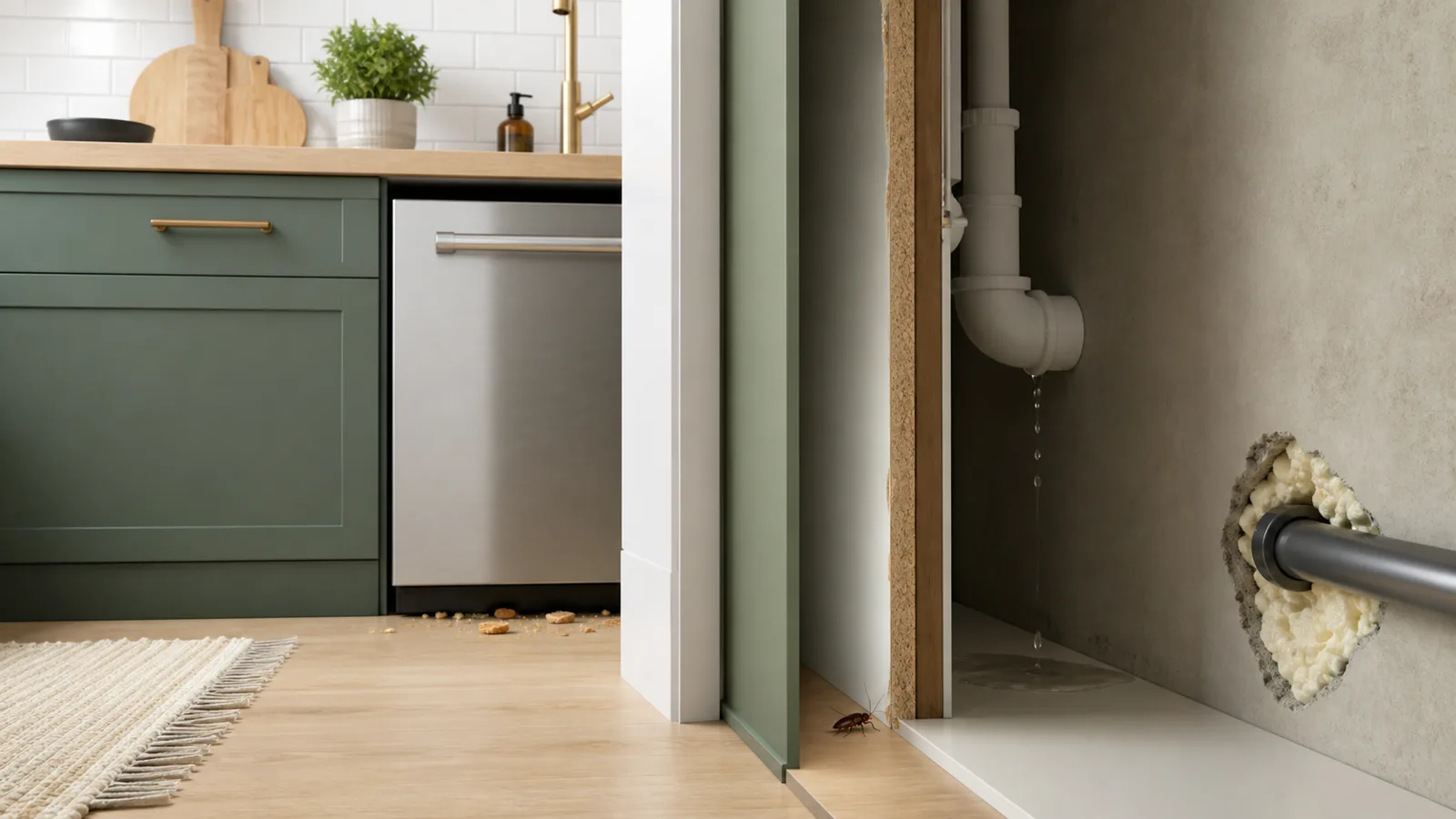
Cockroaches persist where they can reach food, water, shelter, and a route inside. A clean home can still develop a problem through leaks, shared walls, deliveries, drains, or neighboring infestations. Prevention works best when all four resources are addressed together.
The four conditions that support cockroaches
| Condition | Examples | High-impact correction |
|---|---|---|
| Food | Crumbs, grease film, pet food, cardboard residue, trash | Clean hidden edges and store food in resistant containers |
| Water | Leaks, condensation, wet sponges, plant trays, drain moisture | Repair leaks and dry sinks and surfaces overnight |
| Shelter | Cracks, cabinet voids, appliance motors, clutter, corrugated boxes | Reduce clutter and seal harborages after inspection |
| Access | Pipe gaps, doors, shared walls, packages, used appliances | Seal routes and inspect incoming items |
Hidden food matters more than visible cleanliness
Thin grease behind a stove, crumbs beneath a refrigerator, residue in recycling, and pet food left overnight can support activity. Cockroaches also feed on a wide range of organic materials. Focus on inaccessible edges and equipment voids rather than repeatedly cleaning already open surfaces.
Moisture can determine where activity concentrates
German cockroaches often cluster near kitchens and bathrooms because water is reliably available. Large outdoor species may enter from drains, sewers, damp crawlspaces, or irrigated landscapes. Inspect supply lines, drain pans, refrigerator condensate, dishwasher seals, and cabinet bases for slow leaks.
How cockroaches enter
They may move through gaps around plumbing, utility conduits, doors, vents, and connected apartments. Egg cases or insects can also arrive in boxes, grocery packaging, luggage, used furniture, or appliances. Inspect secondhand equipment before bringing it inside and avoid storing corrugated cardboard near food areas.
Seven-night prevention reset
- Place dated monitors behind appliances and inside sink cabinets.
- Clean grease and crumbs from hidden edges.
- Store food and pet food; empty waste.
- Dry sinks, counters, sponges, and drain areas.
- Repair active leaks and condensation sources.
- Seal confirmed entry gaps with suitable materials.
- Compare monitor captures and target remaining harborages.
Use the full cockroach prevention checklist. If monitors capture multiple life stages, combine prevention with the seven-step treatment plan.
Common myths
Do cockroaches only infest dirty homes?
No. Sanitation changes resource availability, but entry routes, moisture, building conditions, and neighboring units also matter.
Does leaving a light on keep them away?
It may change visible behavior but does not remove harborages or resources.
Do certain household smells reliably repel them?
Odors are not a substitute for exclusion, sanitation, monitoring, and targeted control.
When to involve a professional
Seek help for daytime sightings, many nymphs, recurring activity across rooms, inaccessible wall or equipment voids, or a multi-unit building where adjacent units require coordination. Share monitor locations and previous product use with the technician.
Prioritize corrections by evidence
Start where monitors capture the most cockroaches or where nymphs are present. Correct water in that zone first, then food residue and shelter. Sealing before confirming activity can push insects into adjacent rooms, so combine exclusion with monitoring and targeted control. In multi-unit housing, conditions beyond one apartment may sustain reinvasion.
Room-by-room attractant audit
| Area | Often missed | Check |
|---|---|---|
| Kitchen | Motor compartments, grease beside cabinets, recycling residue | Pull movable appliances safely and inspect edges |
| Bathroom | Pipe condensation, vanity voids, damp textiles | Dry surfaces and repair slow leaks |
| Laundry/utility | Floor drains, cardboard storage, appliance lines | Maintain traps and reduce sheltered clutter |
| Living areas | Food under furniture, electronics, pet feeding | Set feeding schedules and inspect warm devices |
How to confirm improvement
Keep monitor locations unchanged for comparison. Record weekly totals, species or size class, and room. A falling count across consecutive checks is more meaningful than one night without a sighting. Continue preventive practices after captures stop because egg cases, neighboring pressure, or an unrepaired route can produce recurrence.
What does not reliably solve attraction
Fragrances, ultrasonic devices, and leaving lights on do not remove food, water, shelter, or access. Excessive repellent spraying may move cockroaches away from monitors and bait placements. Spend effort first on measurable resources and entry conditions.
Food sources people commonly overlook
Cockroaches need only small amounts of residue. Grease mist settles beside cabinets; beverage syrup remains under recycling; crumbs accumulate inside toaster trays; pet kibble rolls beneath appliances; and organic film develops in trash, drains, and cleaning equipment. Establish a routine that reaches these hidden zones without moving heavy appliances unsafely.
Water often sets the overnight activity zone
A slow plumbing seep may not create a visible puddle. Feel for damp cabinet material, inspect mineral deposits and swollen panels, and check refrigerator and dishwasher lines. Condensation on cold pipes can be sufficient. Drying a sink while a pipe gap stays wet inside the wall will have limited impact.
Shelter: why narrow cracks matter
Cockroaches prefer close contact with surfaces and can use narrow seams around cabinets, backsplashes, wall plates, and equipment. Clutter multiplies these protected edges and makes inspection difficult. Reduce cardboard and unused items gradually while monitors and control measures are active so insects do not simply disperse.
Entry versus introduction
An entry point is a route from an existing exterior or neighboring population. An introduction occurs when insects or egg cases arrive with an object. Groceries are not the only concern: used refrigerators, coffee machines, electronics, restaurant equipment, moving boxes, and stored goods deserve inspection. Isolate suspect items in a monitorable area rather than spraying them blindly.
Prioritized 30-day prevention schedule
| Period | Action | Measure |
|---|---|---|
| Days 1–3 | Map sightings, place monitors, correct open food and water | Baseline captures by room |
| Week 1 | Deep-clean high-capture zones and repair active leaks | Fresh signs and captures |
| Week 2 | Seal confirmed gaps and inspect incoming items | Movement at repaired routes |
| Weeks 3–4 | Maintain sanitation and targeted treatment | Trend across unchanged monitor positions |
Climate and building factors
Hot weather, drought, heavy rain, shared plumbing, aging seals, and nearby construction can change pest pressure even when household habits stay the same. Record environmental changes with sightings. This prevents occupants from assuming every recurrence is a sanitation failure and helps identify the actual route.
When prevention needs treatment support
Multiple nymph stages, daytime activity, egg cases, or captures across several rooms indicate that resource correction alone may be too slow. Use targeted baits, dusts, or other methods only according to labels and a species-informed plan. Avoid contaminating bait placements with repellent spray. A professional is appropriate when the source is inaccessible or the building requires coordinated treatment.
Sources
Make prevention sustainable
Assign short daily tasks and deeper weekly checks rather than relying on one intensive cleanup. The best plan is one occupants can maintain: dry the sink, store pet food, remove recycling residue, inspect leak-prone cabinets, and review monitor counts. Correcting the highest-value resource first usually produces more measurable improvement than applying many low-impact deterrents at once.