
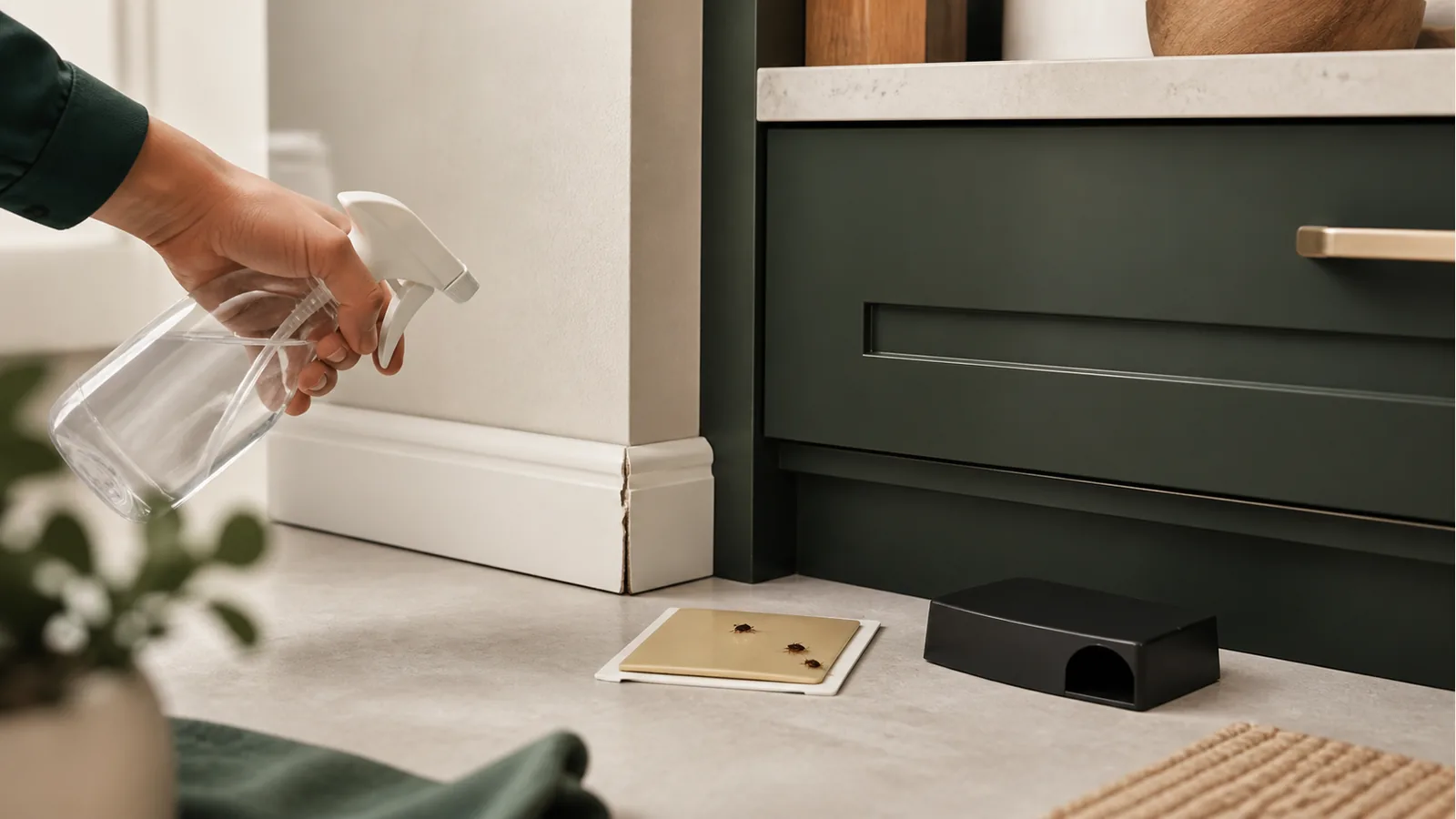
Cockroach sprays can kill insects that are directly contacted or cross a treated area, but they rarely solve an infestation by themselves. The best use is targeted, label-approved treatment based on species and monitoring—not routine spraying of floors, counters, cabinets, or every baseboard.
Editorial verdict
Use sprays only when the label and inspection support a specific placement. For indoor German cockroaches, sanitation, moisture control, sticky monitoring, and protected bait placements usually provide a stronger foundation. Avoid spraying near bait because residues and odors may redirect cockroaches or reduce feeding.
Types of cockroach spray
| Type | What it does | Main limitation |
|---|---|---|
| Contact aerosol | Kills insects hit directly | Does not reach most hidden cockroaches or egg cases |
| Residual spray | Leaves labeled residue on selected surfaces | Placement restrictions, exposure concerns, and possible bait interference |
| Crack-and-crevice application | Targets narrow voids where the label permits | Requires accurate inspection and controlled application |
| Outdoor perimeter spray | Targets exterior-associated species and entry zones | Outdoor-only products must never be used indoors |
| Total-release fogger | Disperses aerosol through open air | Poor harborage penetration plus fire and exposure risks |
Why spraying visible cockroaches is not enough
Visible insects are only the accessible portion of a population. Nymphs, adults, and egg cases can remain inside cabinet joints, appliance voids, wall spaces, pipe routes, and clutter. A contact spray may produce an immediate result without changing the conditions that support the infestation.
Before treatment, place sticky monitors along edges to identify hotspots. Correct leaks, remove crumbs and grease, seal food, and reduce cardboard. These steps improve every control method and reveal whether captures are declining.
Where spray should not be applied
- Food, dishes, utensils, cutting boards, or food-contact surfaces.
- Toiletries, towels, bedding, toys, pet bowls, or animal enclosures.
- Electrical outlets, energized electronics, motors, or appliance interiors unless expressly allowed.
- Wet shower, tub, sink, or drain surfaces unless the label permits the exact use.
- Air ducts, HVAC equipment, or ventilation openings unless specifically labeled.
- Anywhere children or pets can contact residue contrary to label precautions.
The label controls the decision. Confirm the pest, indoor or outdoor site, allowed surfaces, dilution, application method, protective equipment, ventilation, re-entry time, and cleanup instructions. Never transfer pesticide to an unmarked container or mix products.
Spray and bait: avoid treatment conflicts
Bait must be encountered and eaten. Spraying on or around bait placements can contaminate them or change cockroach travel. If both methods are part of a label-compliant plan, keep placements separated and follow the product directions. Do not assume different brands or active ingredients are automatically compatible.
Compare gel, bait stations, and granular baits, then place the selected method into the complete seven-step control plan.
How to use a labeled spray more responsibly
- Identify the cockroach and inspect the source.
- Read the full label before purchase and again before use.
- Remove people, pets, food, and sensitive items as directed.
- Apply only to the listed site and surface using the specified amount.
- Ventilate and observe re-entry instructions.
- Store the original container locked away and retain the label.
- Measure weekly sticky-trap captures instead of judging by one sighting.
Indoor versus outdoor cockroaches
German cockroaches commonly reproduce indoors close to food, water, and warmth. Broad repellent spraying may scatter activity and conflict with bait. American and other outdoor-associated cockroaches may require inspection of drains, basements, exterior debris, doors, and utility penetrations. An exterior product is not automatically safe or legal indoors.
Use our German vs American cockroach comparison before selecting a treatment site.
When to call a professional
Seek professional help for daytime activity, several rooms or apartments, repeated nymph captures, inaccessible wall or sewer sources, treatment failure, or households where health and exposure concerns complicate pesticide use. Ask the provider to explain species, products, placements, preparation, and follow-up.
Frequently asked questions
What spray kills cockroaches instantly?
Some contact aerosols can kill insects that are thoroughly contacted, but speed on one visible cockroach does not predict infestation control. Harborages and egg cases remain the central problem.
Should I spray every baseboard?
No. Routine broadcast spraying creates unnecessary residue and may miss the actual harborages. Treat only label-approved locations supported by inspection.
Can I spray inside electronics?
Do not spray energized devices or internal components unless both the pesticide label and equipment instructions permit it. Follow our electronics safety guide.
Are plant-based sprays automatically pet-safe?
No. “Natural” does not establish safety for every animal, dose, or route of exposure. Follow the label and obtain veterinary advice for species-specific concerns.
2 thoughts on “Cockroach Sprays: Types, Uses, Limits, and Safety”