
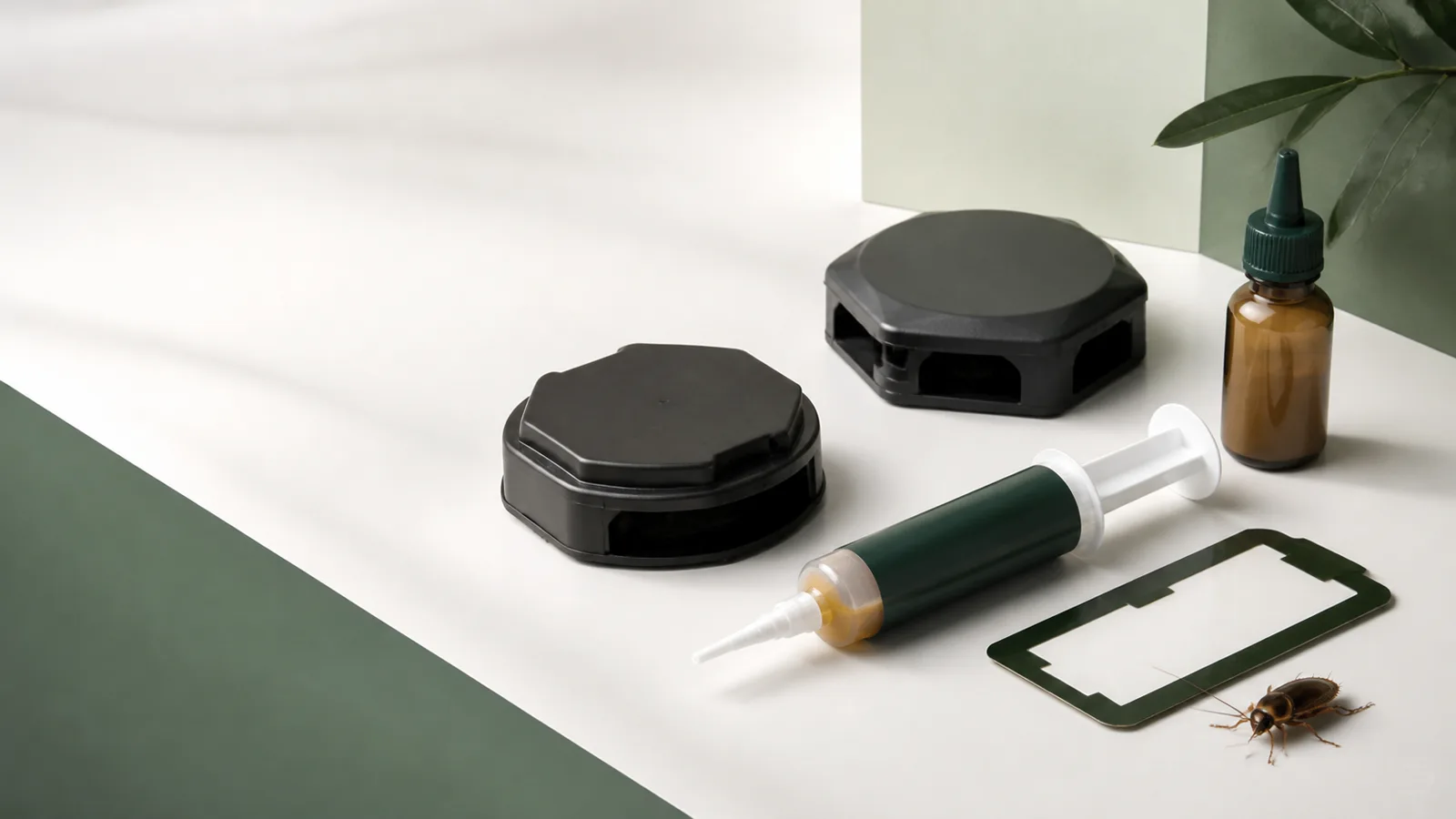
Our top cockroach-control picks for 2026
Compare products by treatment role, label-directed placement, household safety, and practical value.
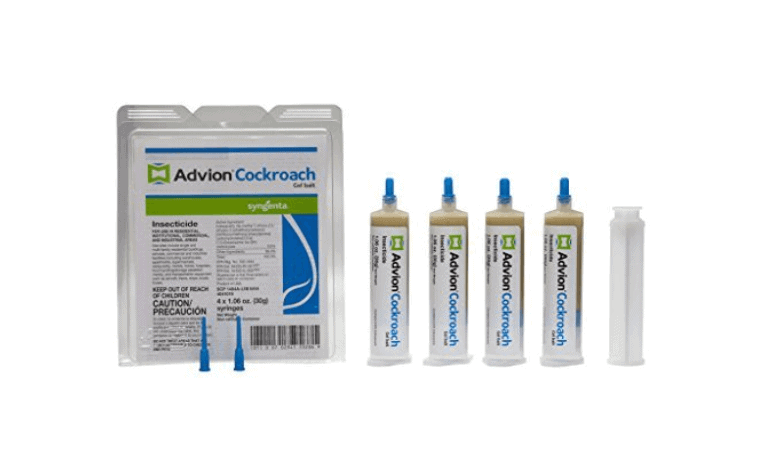
Advion Cockroach Gel Bait
Best for: Targeted gel placements
Flexible small placements near confirmed harborages.
- Flexible crack-and-crevice placementnUseful within an integrated bait plannNo price or rating claims
Know before buying: Keep away from children, pets, food-contact surfaces, and exposed electrical components.
Check current options on Amazon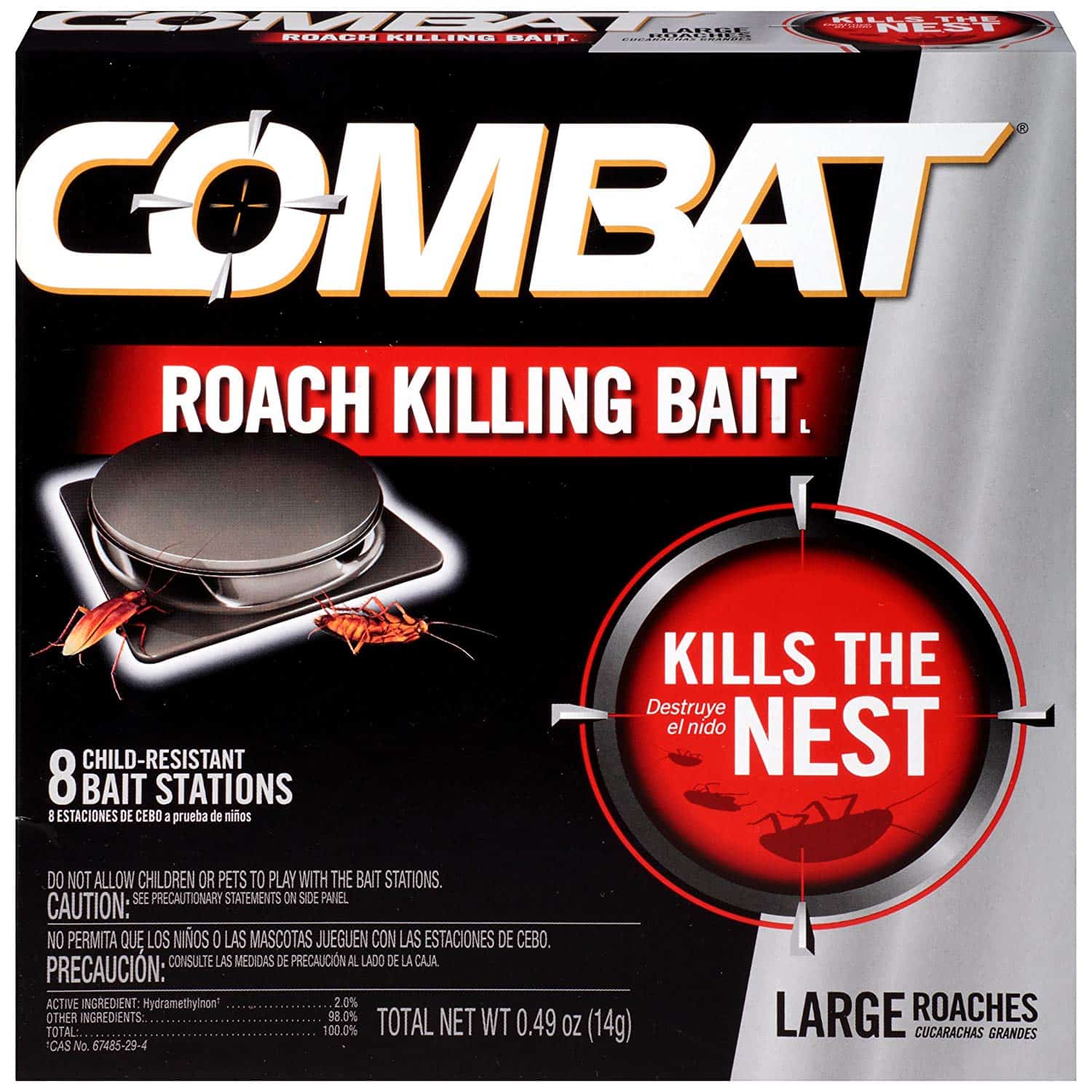
Combat Roach Killing Bait
Best for: Ready-to-place enclosed bait stations
An enclosed consumer bait format for straightforward placement.
- Contained station formatnSimple placementnUseful as one layer of control
Know before buying: The library image shows older packaging; verify the current listing and label.
Check current options on Amazon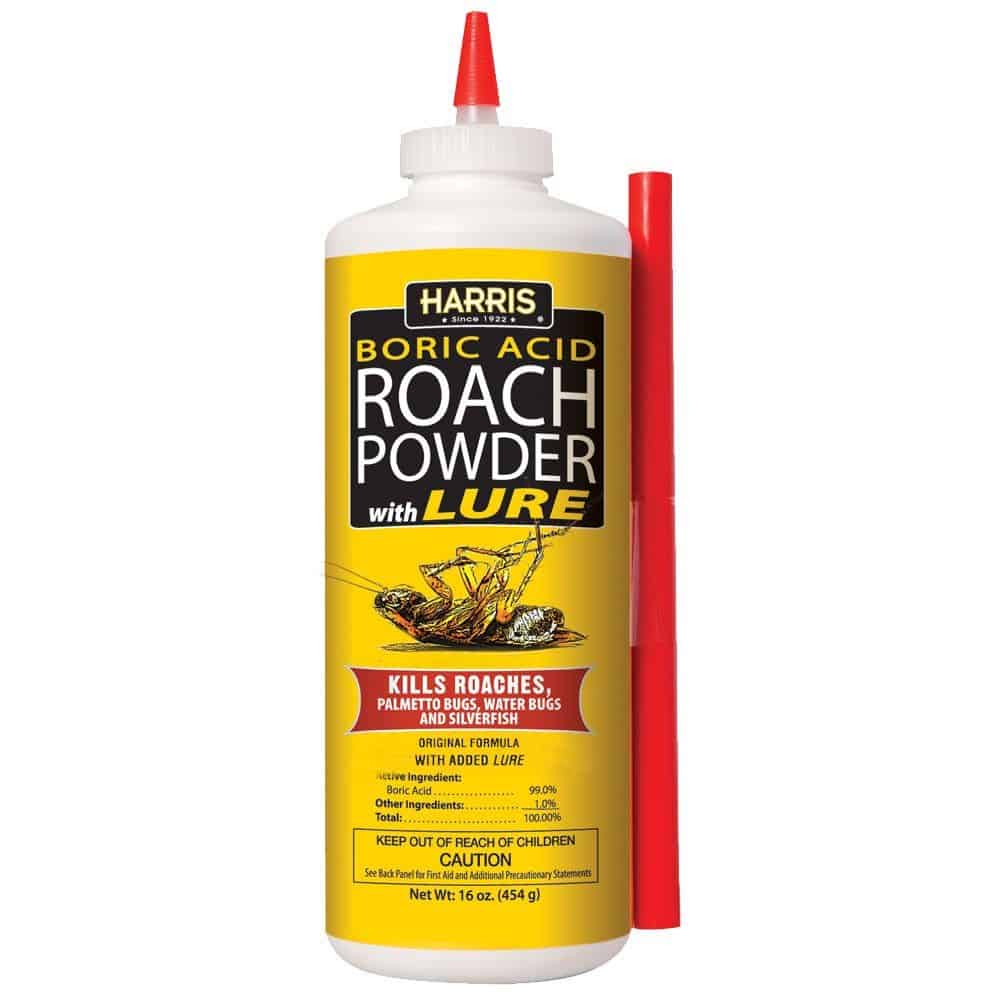
Harris Boric Acid Roach Powder
Best for: Dry, inaccessible, label-permitted cracks and voids
A boric-acid dust example for precise, low-visibility application.
- Long-lasting when kept drynLow-volume targeted usenUseful for selected voids
Know before buying: Apply only as the current label directs; do not leave exposed piles.
Check current options on AmazonEditorial verdict
For most established indoor infestations, cockroach bait placed near confirmed harborages is a better starting pesticide tool than broad surface sprays or total-release foggers. Sticky traps are essential for finding and measuring activity, while sanitation, moisture repair, and exclusion make every treatment more effective. There is no single “best roach killer” for every species, building, or safety constraint.
Best option by situation
- Finding the source: sticky traps or glue boards.
- German cockroaches in kitchens: targeted gel bait or enclosed bait stations plus sanitation.
- Homes with children or pets: tamper-resistant stations placed exactly as labeled and out of reach.
- Dry inaccessible voids: labeled dust applied precisely—not scattered across open surfaces.
- Occasional outdoor invaders: exclusion, moisture correction, and source control before indoor pesticide.
- Heavy or multi-unit infestation: coordinated professional IPM rather than adding more consumer products.
Cockroach control methods compared
| Method | Best use | Main advantage | Main limitation |
|---|---|---|---|
| Sticky traps | Detection and monitoring | No airborne pesticide; reveals hotspots | Does not control the hidden population alone |
| Gel bait | Targeted crack-and-crevice treatment near indoor harborages | Many small placements can reach foraging cockroaches | Can dry out, become contaminated, or fail when poorly placed |
| Enclosed bait stations | Accessible areas needing contained bait | Less exposed formulation and simple placement | Fixed stations may not fit narrow harborages |
| Insecticidal dust | Specific dry voids when the label permits | Can remain in protected locations | Overapplication creates exposure and may repel or be avoided |
| Targeted spray | Label-authorized spot or crack treatment | Useful for selected sites and species | Broad spraying may miss harborages and interfere with bait |
| Insect growth regulator | Part of a broader professional or label-directed program | Targets development and reproduction | Does not provide an immediate visible knockdown |
| Total-release fogger | Only a label-authorized situation with full safety compliance | Treats exposed open space | Does not reliably penetrate hidden cracks; fire and exposure hazards |
| Repellent device or home remedy | Not a substitute for IPM | May appear convenient | Evidence, coverage, and durability may be inadequate |
How we evaluate cockroach-control products
Roach Expert does not label a product “best” solely because it is popular or pays a commission. This comparison evaluates treatment types using current labels, active ingredients and mode of action, suitability for the target species and location, exposure controls, placement requirements, monitoring value, resistance considerations, and how well the method fits an integrated pest management plan. We identify hands-on testing only when it has actually occurred.
- Effectiveness fit: can the method reach the identified species and harborage?
- Safety fit: can it be used as labeled around the occupants and surfaces present?
- Placement control: is the pesticide confined to a targeted site?
- Measurability: can progress be confirmed with monitoring?
- Resistance and aversion: does the plan avoid repeating a failing approach?
- Total cost: does it address the source or only repeat short-term treatment?
1. Sticky traps: the tool every plan needs
Sticky traps are not primarily a “killer” for population control. Their value is information. Place them against walls behind appliances, beneath sinks, inside cabinet corners, and beside suspected travel routes. Label each trap and record catches. The highest counts show where bait or repairs should be concentrated and whether the plan is improving.
Advantages
- Supports identification
- Measures before-and-after activity
- No spray mist or residue across surfaces
Limitations
- Does not reach egg cases or hidden populations
- Placement strongly affects results
- Adhesive must be protected from children and pets
2. Gel bait: flexible placement near harborages
Gel bait can be placed in multiple small spots near cracks, droppings, and foraging routes when the label permits. Bait does not attract cockroaches across an entire room, so inspection matters. Remove competing food, avoid contamination by cleaners or repellent sprays, and replace bait according to its condition and label.
Gel is not appropriate inside electrical equipment where shock risk exists, on food-contact surfaces, or where children and pets can reach it. See our detailed cockroach bait guide.
3. Enclosed bait stations: contained and convenient
Prefilled stations contain bait within a housing and can suit locations where exposed gel would be difficult to protect. Their effectiveness still depends on placing them close to cockroach travel and keeping other food limited. A station in the middle of a room is unlikely to compensate for a hidden harborage behind an appliance.
4. Boric acid and other dusts: precision matters
A labeled dust may be useful in a dry, inaccessible crack or void. More is not better: heavy visible piles are more likely to be avoided, disturbed, or spread. Do not broadcast dust over floors, counters, insulation, electronics, or ventilation systems. Our boric acid guide explains appropriate limitations.
5. Sprays: targeted use, not routine broadcasting
Some sprays are labeled for spot, crack-and-crevice, or perimeter applications. The correct product depends on the pest, surface, and site allowed by the label. Routine spraying across floors and baseboards can increase exposure without reaching hidden cockroaches, and repellent residues can interfere with nearby bait.
6. Foggers: important limitations and hazards
Total-release foggers release pesticide and flammable propellant into open space. They may not reach the cracks and voids where cockroaches hide. Misuse can cause illness, fire, or explosion. Never use more units than the label allows, and follow every requirement for occupants, pets, ignition sources, food, reentry, and ventilation. Read our cockroach fogger safety guide before considering one.
How to choose without wasting money
- Identify the species. Indoor-breeding German cockroaches and outdoor invaders need different source control.
- Map the activity. Use traps before buying several pesticides.
- Read the label before purchase. Confirm the pest, site, application method, precautions, and registration status.
- Choose the least exposed targeted option that fits. Bait or a contained trap often makes more sense than broadcasting pesticide.
- Plan follow-up. Buy enough monitoring supplies and schedule repairs, cleaning, and reassessment.
- Escalate appropriately. Heavy, recurring, multi-room, or multi-unit activity may cost less to solve with coordinated professional IPM.
Frequently asked questions
What kills cockroaches the fastest?
Fast knockdown of one exposed insect is not the same as population control. A slower targeted bait near the harborage may provide better long-term control than a spray that kills only visible cockroaches.
Can I use bait and spray together?
Only as allowed by their labels and with a plan that prevents spray from contaminating or repelling cockroaches from bait. If unsure, choose one coordinated method or ask a licensed professional.
What is the safest cockroach product for pets?
No pesticide is automatically “pet safe.” Choose a product and placement permitted by the label, use tamper-resistant containment where appropriate, and keep products and treated sites inaccessible. See our pet-conscious cockroach control guide.
Sources and disclosure
- University of California IPM: Cockroaches
- US EPA: Do’s and Don’ts of Pest Control
- US EPA: Total-Release Fogger Safety
This page may contain affiliate links. Editorial conclusions are based on treatment suitability and documented evidence, not commission rate. Read our review methodology and affiliate disclosure.
Substantially reviewed and updated: August 2026. Product labels and registrations can change; verify the current label before purchase or use.
19 thoughts on “Best Cockroach Control Products: Methods Compared”