
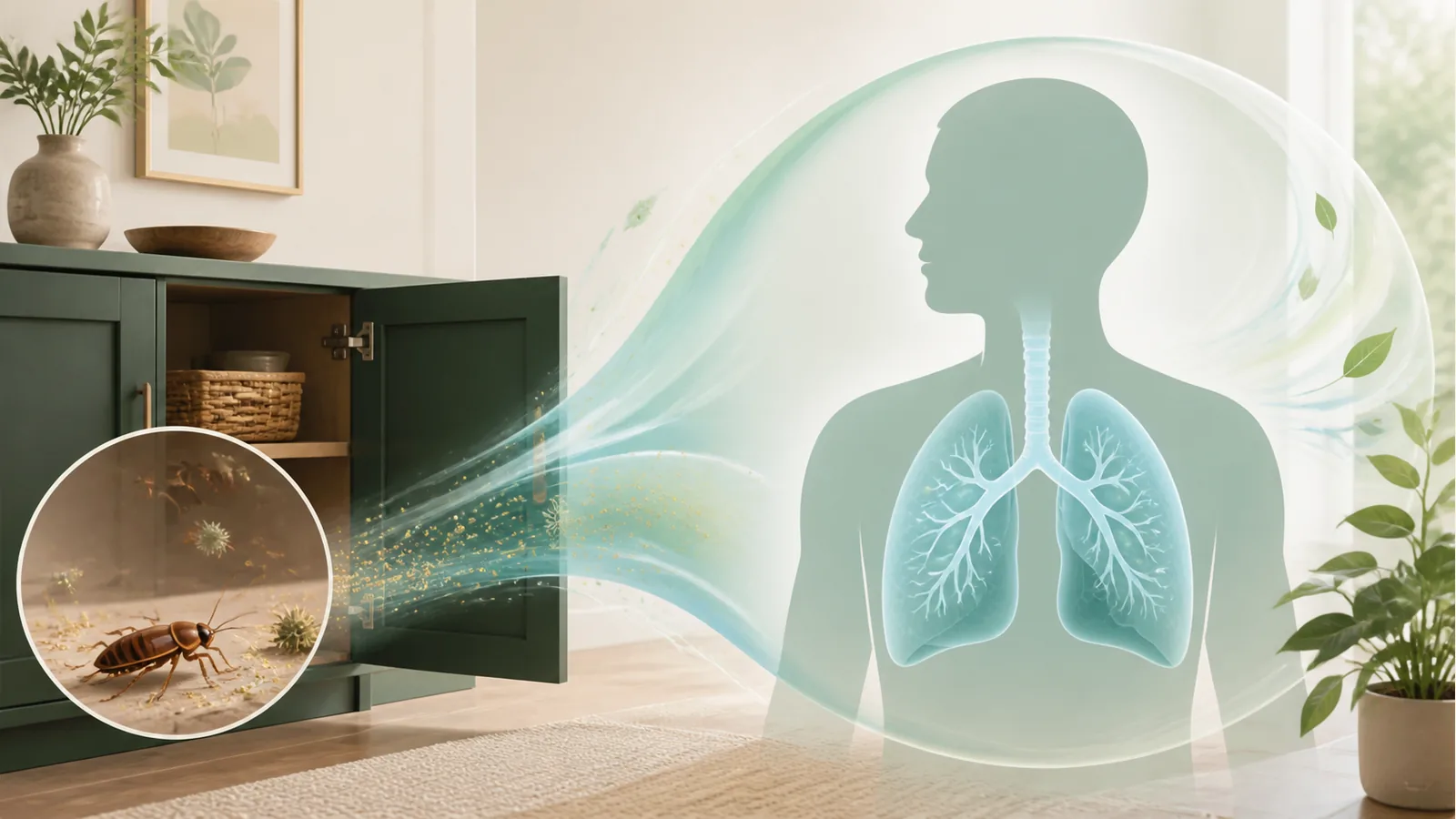
Cockroach body fragments, fecal material, saliva, and shed skins can become part of household dust and act as asthma or allergy triggers for sensitized people. The practical response is to reduce the infestation and the allergen reservoir together: monitor and control cockroaches, remove food and moisture, clean contaminated areas without spreading dust, and coordinate with a healthcare professional when symptoms are involved.
Key actions
- Do not diagnose the cause of breathing symptoms from a cockroach sighting alone.
- Use sticky monitors to locate activity and follow an integrated pest management plan.
- Clean droppings and debris with methods that minimize airborne dust.
- Repair leaks, seal food, remove clutter, and prevent reinfestation.
- Discuss persistent wheezing, coughing, chest tightness, or known asthma with a qualified healthcare professional.
How cockroaches contribute to indoor allergens
Cockroach allergen material can accumulate where insects feed, hide, and travel. It may be present in droppings, shed exoskeletons, egg-case debris, body fragments, and secretions. Once dried and disturbed, small particles can mix with settled dust.
The presence of allergens does not mean every occupant will react. Sensitivity, exposure level, ventilation, existing asthma, and other indoor triggers all influence symptoms. Dust mites, mold, pets, smoke, combustion pollutants, and outdoor allergens may also be relevant.
Signs that allergen exposure may be substantial
- Repeated cockroach captures in bedrooms, kitchens, or living areas.
- Visible droppings, shed skins, egg cases, or dead insects.
- Daytime cockroach activity or several life stages.
- Contamination inside cabinets, appliances, furniture voids, or HVAC-adjacent areas.
- A longstanding infestation in a connected apartment building.
These signs support the need for cleanup and control; they do not establish a medical diagnosis. Use our cockroach infestation signs guide to document activity.
A safer cleanup sequence
1. Control active cockroaches first
Cleaning without reducing the population allows contamination to return. Map activity with sticky monitors, remove competing food and water, and use appropriately labeled bait in protected locations. For a larger infestation or sensitive household, consider a licensed pest-management professional.
2. Prepare the area
Keep children and pets out of the work area. Remove or cover food, dishes, toothbrushes, pet bowls, and food-contact items. Follow product and equipment instructions. People with significant asthma or allergy concerns should obtain individualized medical guidance before performing a large cleanup.
3. Avoid dry sweeping contaminated dust
Dry sweeping, aggressive brushing, or compressed air can redistribute particles. When suitable for the surface, use a HEPA-filter vacuum for accessible dry debris, then damp-clean hard surfaces. Do not vacuum live cockroaches with equipment that could release or spread them elsewhere.
4. Damp-clean hard surfaces
Use a cleaning product appropriate for the material and follow its label. Wipe cabinet shelves, drawer tracks, appliance exteriors, baseboards, and protected cracks that can be safely reached. Never mix cleaning products. Avoid soaking electrical components or unfinished materials.
5. Handle porous items realistically
Wash washable fabrics according to their care instructions. Heavily contaminated cardboard and low-value porous clutter may be better discarded in a sealed bag. Upholstery, ducts, electronics, or inaccessible wall voids may require specialist advice.
6. Prevent the reservoir from rebuilding
Continue monitoring after captures decline. Repair leaks, seal food, remove cardboard, clean crumbs and grease, and close plumbing or structural routes. Save the complete prevention checklist for routine follow-up.
Medical safety: Seek urgent medical help for severe breathing difficulty, blue or gray lips, confusion, inability to speak normally, or symptoms that do not respond to a prescribed rescue plan. This article is educational and does not replace medical diagnosis or treatment.
Pesticide exposure and asthma-sensitive households
More pesticide is not better. Aerosols, foggers, and broad surface sprays can increase avoidable indoor exposure and often fail to reach cockroach harborages. Select the least disruptive method that fits the evidence, use only products labeled for the site, and follow every precaution and re-entry instruction.
Small bait placements in inaccessible cracks, monitoring, sanitation, moisture correction, and exclusion are generally more targeted than routine broadcast spraying. Inform a pest-control provider about asthma, allergies, children, pets, pregnancy, aquariums, and other sensitivities before treatment.
Apartment and multifamily considerations
Allergen and cockroach control can fail when only one unit is addressed. Plumbing routes, wall voids, trash areas, and adjoining units may support continued movement. Keep a dated record of captures and leaks, notify property management, and ask whether neighboring units and common areas will be inspected.
Read our guide to cockroaches in apartments and use the DIY vs professional decision guide to assess escalation.
How to measure whether the plan is working
| Measure | Improvement | Reason to reassess |
|---|---|---|
| Sticky monitors | Weekly captures consistently decline | Counts remain high or spread to new rooms |
| Visual evidence | Less spotting, debris, and live activity | New droppings or nymphs continue appearing |
| Moisture | Leaks repaired and surfaces remain dry | Condensation or plumbing defects persist |
| Symptoms | Managed according to the healthcare plan | Symptoms worsen, become frequent, or severe |
Symptoms should be evaluated medically because improvement or worsening can involve many triggers and does not prove that cockroaches were the only cause.
Frequently asked questions
Can one cockroach trigger asthma?
A single sighting does not reveal the amount of allergen present or whether a person is sensitized. Inspect for additional evidence, monitor the area, and follow medical advice for symptoms.
Does killing the cockroaches remove the allergen?
No. Dead insects, droppings, and shed material can remain in dust after activity declines. Control should be followed by careful cleanup and prevention.
Should I use a fogger for a fast result?
Foggers can increase indoor pesticide exposure while failing to penetrate narrow harborages. Review our cockroach fogger safety guide before considering any total-release product.
Is professional cleaning always required?
Not for every situation. The appropriate level depends on infestation severity, the contaminated materials, occupant health, and access. Significant contamination or sensitive occupants may justify professional pest-control, cleaning, building-maintenance, or medical support.
1 thought on “Cockroaches and Asthma: Allergens, Cleanup, and Control”